
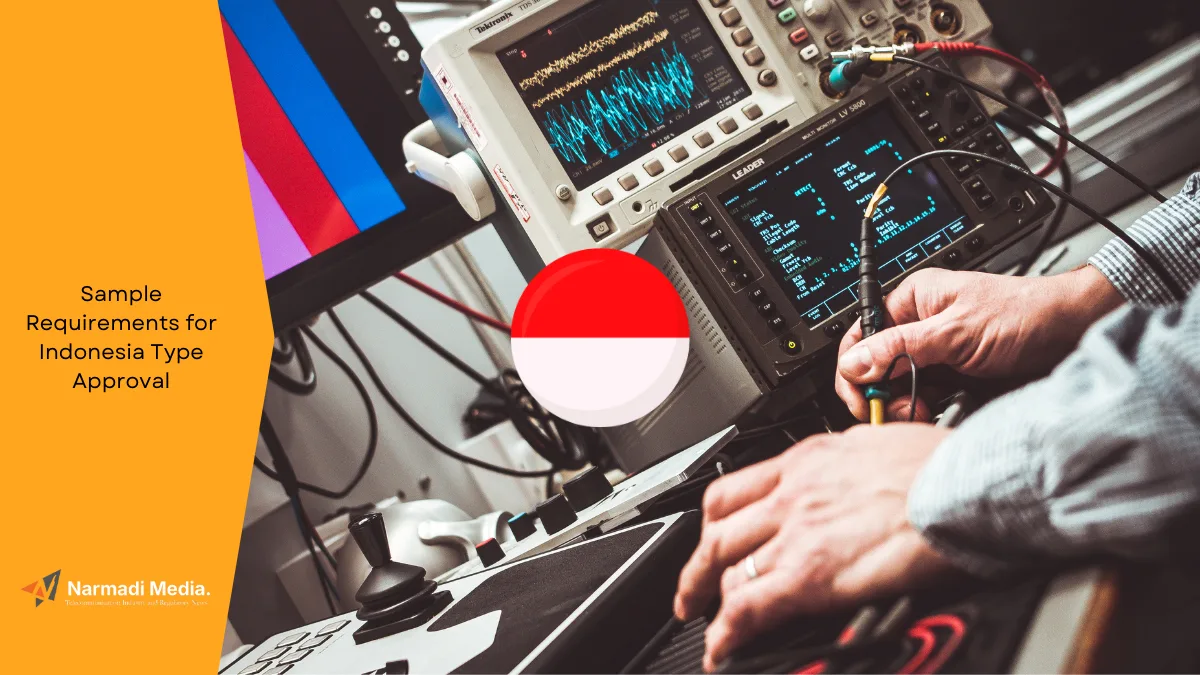
Manufacturers need to be aware of the sample requirements for Indonesia type approval. This is one of the requirements for performing local testing in the DJID certification process.
Sample requirements for Indonesia type approval are needed to test whether telecommunications devices meet the specified criteria. In this case, the criteria are set by DJID or the Directorate General of Digital Infrastructure Resources, which is the agency that regulates the approval process for telecommunications equipment that enters and circulates in the country.
Frequently asked questions regarding sample requirements for Indonesia type approval include how many samples are needed and what the criteria are. We will answer these questions thoroughly in this article.
Also Read
What is a Test Sample?
A test sample is a telecommunications or wireless device that will be used for laboratory testing in the DJID certification process. Test samples are required when you choose the local testing for Indonesia type approval.
For other application routes, sample requirements for Indonesia type approval are also required. This occurs if there are missing requirements or additional testing is required at an Indonesian laboratory.
During testing, samples will be measured to ensure they comply with applicable technical standards. Sample requirements for Indonesia type approval will depend on the policies of each laboratory.
What Are the Testing Processes?
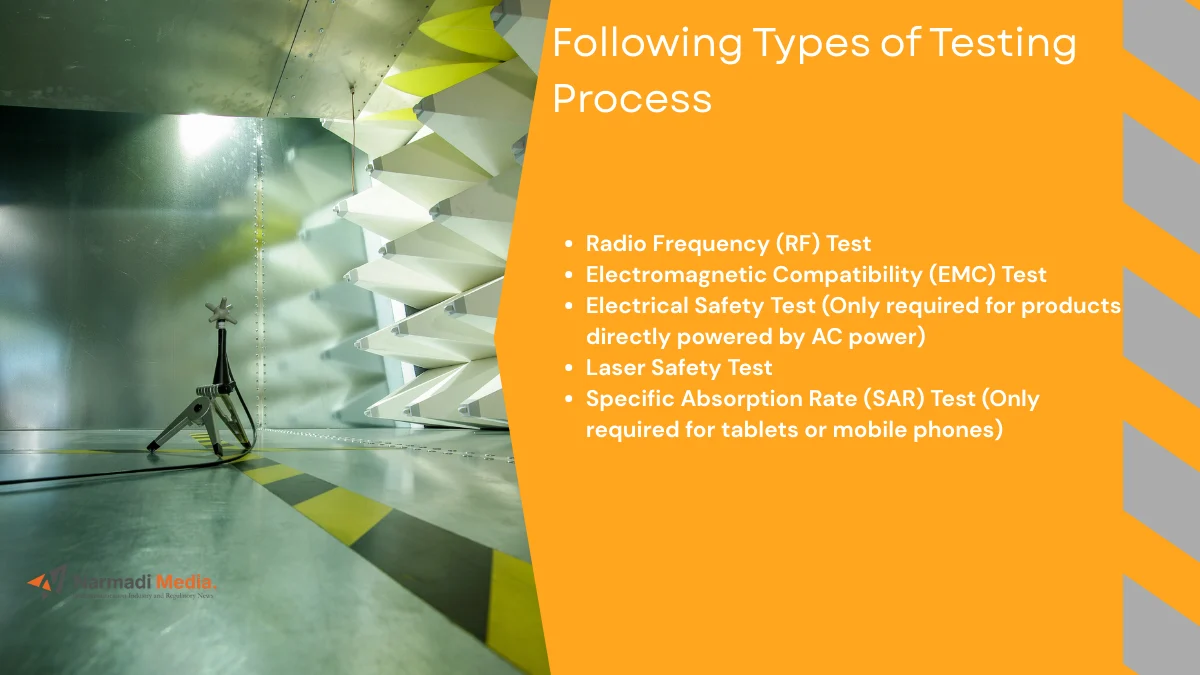
Sample requirements for Indonesia type approval will be used to conduct several types of testing. The type of testing will depend on the product and the technical regulations that cover it.
The following types of testing must be performed:
- Radio Frequency (RF) Testing: The process is for a device that uses radio frequencies that evaluate the wireless signal transmission.
- Electromagnetic Compatibility (EMC) Testing: The process of testing devices to ensure that they do not interfere with other devices.
- Electrical Safety Testing: The process of ensuring that devices are safe to use.
- Laser Safety Testing: The process of testing laser-based devices.
- Specific Absorption Rate (SAR) Testing: The process of evaluating RF energy exposure to humans.
The mandatory testing processes for Indonesia type approval are RF, EMC, and electrical safety testing. The other two tests will depend on the device specifications. If the device is laser-based, it will undergo laser safety testing. Meanwhile, SAR testing is only required for mobile phones and tablets.
The entire process will be carried out in 10 local laboratories that have been accredited by DJID. Testing can be carried out in one or several different laboratories. This is because each laboratory has its own testing capabilities.
How Many Samples Are Required?
Sample requirements for Indonesia type approval are a minimum of two pieces. One sample will be used for RF testing on devices that use radio frequencies. The other sample will be used for EMC and electrical safety testing.
The number of samples required may be higher if the product has multiple functions and technologies. Additionally, if tests such as laser safety and SAR are required, the number of samples needed will increase.
It is important to know the number of samples required from the outset, as insufficient samples will result in additional shipping costs. If you use Narmadi’s RF type approval services, you can consult with us about the number of samples required for your product.
We will also conduct pre-testing on the samples you send before performing RF testing directly in the lab. This service does not incur additional costs and will help you reduce expenses by avoiding retesting.
Sample Requirements for Indonesia Type Approval
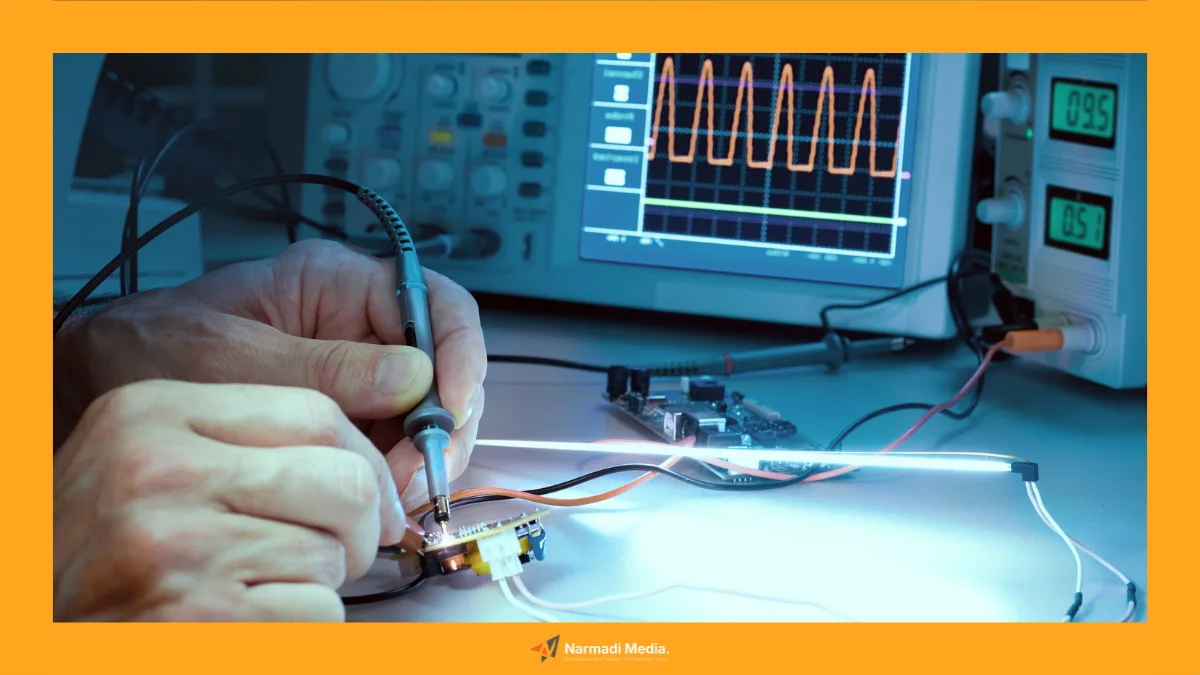
Each type of testing requires different sample requirements for Indonesia type approval. Samples must be sent in the required condition. If not, it may be necessary to resend the sample according to the required conditions.
Let’s discuss the sample conditioning requirements for each type of testing one by one. That way, you can avoid mistakes when sending samples for testing.
RF testing
RF testing is the longest type of testing and requires more sample conditioning. Sample requirements for Indonesia type approval for this test must be in the form of the end product. So if the product is a printer, the sample sent must be a printer.
You cannot just send the RF module or PCB board to the printer. This is a requirement from Indonesian labs, which aim to determine the actual form of the product and take photos of the product sample.
Samples for RF testing must also be accompanied by a label containing the product name, model name, brand name, country of origin, and serial number. Additionally, you also need to send the Standard Operating Procedure (SOP) and testing software.
There are two types of sample conditioning for RF testing, namely conducted and radiated conditions. Here is an explanation of each conditioning.
Conducted mode
Conducted mode is a condition where the product must be equipped with an SMA connector to transmit its signal. This mode is only conditioned on RF products and other technologies that have multiple channels. Testing is performed with a spectrum analyzer.
Additionally, this mode also measures testing software, whether installed on the product or run separately on other devices, such as laptops or computers. This is where testing SOPs are needed to run the software to perform these tests.
The purpose of using this testing software is to enable us to control radio frequency transmission. In this condition, the software must be able to regulate so that transmission is only emitted on one channel continuously in a modulated wave.
Conducted samples are required for products with RF features, such as:
- Bluetooth, ANT+, Zigbee, and Other SRD devices operating in the 2.4 GHz band
- RLAN/WLAN 2.4 GHz and 5 GHz
- RFID with a frequency of 920–923 MHz
- Cellular (2G, 3G, 4G, 5G)
- LPWA/IoT
Radiated mode
Radiated mode is a condition in which a device can directly emit radio frequencies when turned on. This condition applies to low-power products (transmission power less than 10 mW).
The required sample is normal, or one that has been exposed to radiation, also known as a radiated sample. Testing radiated samples follows the same process as testing normal samples. However, this process requires more time to produce test parameters.
Radiated samples are required for products with RF features, such as:
- NFC
- SRD 125 KHz
- SRD 134 KHz
- RFID 13.56 MHz
- Low Power 433 MHz
- Radar 24 GHz
- Radar 77 GHz
EMC and Electrical Safety Testing
Sample requirements for Indonesia type approval for EMC and electrical safety testing are normal/commercial samples. Samples are finished products that will be sold.
The EMC and electrical safety testing standards refer to international standards set by the Comité International Spécial des Perturbations Radioélectriques (CISPR) or called the International Special Committee on Radio Interference, the International Electrotechnical Commission (IEC), and the European Telecommunications Standards Institute (ETSI).
The EMC standards used are CISPR 32 and EN. 301 489. However, KOMDIGI currently has plans to implement CISPR 35 for EMC testing in Indonesia. As for electrical safety, with the parameters tested being overvoltage and leakage current, the standards are IEC 60950-1 or IEC 62368-1.
Laser Safety and SAR Testing
As explained earlier, laser safety and SAR testing in Indonesia are additional tests for certain devices. Laser-based devices will undergo laser safety testing. Meanwhile, SAR testing is only required for mobile phones and tablets.
The testing sample requirements are basically in line with the two previous types of testing. However, laser safety testing requires an SFP transceiver module for the testing process. Meanwhile, the technical testing procedures comply with the established provisions.
Those are the sample requirements for Indonesia type approval. You need at least two samples with different sample conditions according to the type of testing. More samples may be required if the product has multiple functions and technologies.
Test sample issues can cause delays in the certification testing process. This can be caused by an insufficient number of samples or inappropriate sample conditions. To avoid this problem, you can consult with Narmadi Company.
With a team of professionals with more than 15 years of experience, we are ready to help you with your RF type approval issues effectively and efficiently. We have a pretesting service that will reduce the risk of failure in the lab, a real-time monitored certification process, and an international network that can help you penetrate the global market.