
Manufacturers need to be aware of local testing for Indonesia type approval. This is one of the keys to accessing the market through the DJID certification process.
Testing is used to ensure that devices on the market meet the safety and quality standards set in Indonesia. DJID, or the Directorate General of Digital Infrastructure, is the institution that regulates local testing for Indonesia type approval as one of the approval processes for telecommunications equipment entering and circulating in the country.
Is local testing for Indonesia type approval mandatory? Is it permissible to conduct testing in international laboratories? We will answer these questions thoroughly in this article.
Also Read
What is Local Testing for RF Type Approval?
Local testing for Radio Frequency (RF) type approval is a step in testing samples of telecom or wireless devices in a country that is the marketing destination. Each country has its own rules for frequency usage, power levels, and permitted emissions.
This is done to ensure that wireless products comply with the spectrum rules of the destination country, interference restrictions, and safety standards. Additionally, it ensures that the device can work safely and effectively in the environment of a particular country.
The process requires testing in an accredited local laboratory. In Indonesia, local testing is one of the recommended pathways in the DJID certification process.
Testing Process
There are five types of testing processes for applying for Indonesia type approval certification. These tests include:
- Radio Frequency (RF) Test
- Electromagnetic Compatibility (EMC) Test
- Electrical Safety Test (Only required for products directly powered by AC power)
- Laser Safety Test
- Specific Absorption Rate (SAR) Test (Only required for tablets or mobile phones)
Testing must meet two types of sample conditions:
- Conducted: This condition is required for devices that require special configuration to be able to transmit radio frequencies. All samples with RF features must meet this condition. The testing process can be carried out in a closed or open room.
- Radiated: This condition is for testing devices on samples that can directly emit radio frequencies when turned on. It is used for samples with low-frequency RF features, EMC testing, electrical safety, and laser safety. Radiation exposure testing at frequencies below 433 MHz must be conducted in a closed room.
RF testing has four parameters for reference. The following are the testing parameters:
- Frequency Range: The range or spectrum of frequencies generated.
- Output Power: The transmission power generated when activated.
- Bandwidth: Data transmission speed.
- Spurious Emissions: Unwanted radio frequency emissions.
Local Testing for Indonesia Type Approval
Local testing for Indonesia type approval is one of the paths that applicants can take. Taking this path means conducting all the necessary tests in an accredited laboratory in Indonesia.
This is the most comprehensive path in the DJID certification process. Although optional, local testing for Indonesia type approval is the recommended option.
Taking this path will save more costs than just going through document evaluation. This is especially true for devices that only use one or two technologies, such as Bluetooth and NFC.
Another Pathway That Can Be Chosen
In addition to local testing, several other paths can be taken to obtain DJID certification. These paths are alternative options for companies that already have test reports from laboratories abroad.
However, it is not only test reports and their summaries that are required. Usually, clear and complete documentation requirements for Indonesian type approval are also needed.
For example, a power of attorney from the brand owner to the certification applicant for Indonesia type approval, who will later be responsible for the sale of their products. All documents must be completed with a valid digital signature.
Paths other than local testing have a shorter waiting time. This is because they do not require a long testing period.
Document evaluation
Document evaluation or paperwork becomes one of the alternative options other than local testing for Indonesia type approval. Taking this route means you do not need to conduct testing in an Indonesian laboratory. The requirement is that you have obtained a test report from an international laboratory that is registered and accredited by DJID.
Even though you do not go through laboratory testing in Indonesia, the test report from an international laboratory must still comply with the technical testing standards applicable in Indonesia.
Please note that for a valid test report from an international laboratory, only RF, EMC, and Electrical Safety testing is required. For Laser Safety and SAR testing, the testing must be carried out in a local laboratory in Indonesia.
Document evaluation based on RF module reports
This pathway is actually similar to the document evaluation pathway. However, it is specifically for tools or devices whose radio frequency parameter test results in samples that do not yet or do not meet DJID requirements.
Regulatory differences between other countries and Indonesia have caused this condition. If this is the case, RF testing must be redone. However, this only applies to the modules within the product, not the end product.
The testing can be conducted at an international laboratory that is registered and accredited by DJID or at a laboratory in Indonesia. This pathway is often used for home appliance products, including refrigerators, freezers, washing machines, and others.
Partial paperwork
Partial paperwork is a special option for companies that have conducted testing in international laboratories but have not yet fully met the technical requirements. This is because there is one or more types of testing that have not been carried out.
For example, telecom and wireless products that have undergone RF and EMC testing in overseas laboratories. However, according to technical regulations in Indonesia, these products are also required to undergo electrical safety testing. Therefore, electrical safety testing can be carried out in Indonesia when the application is submitted.
Testing Lab Requirements
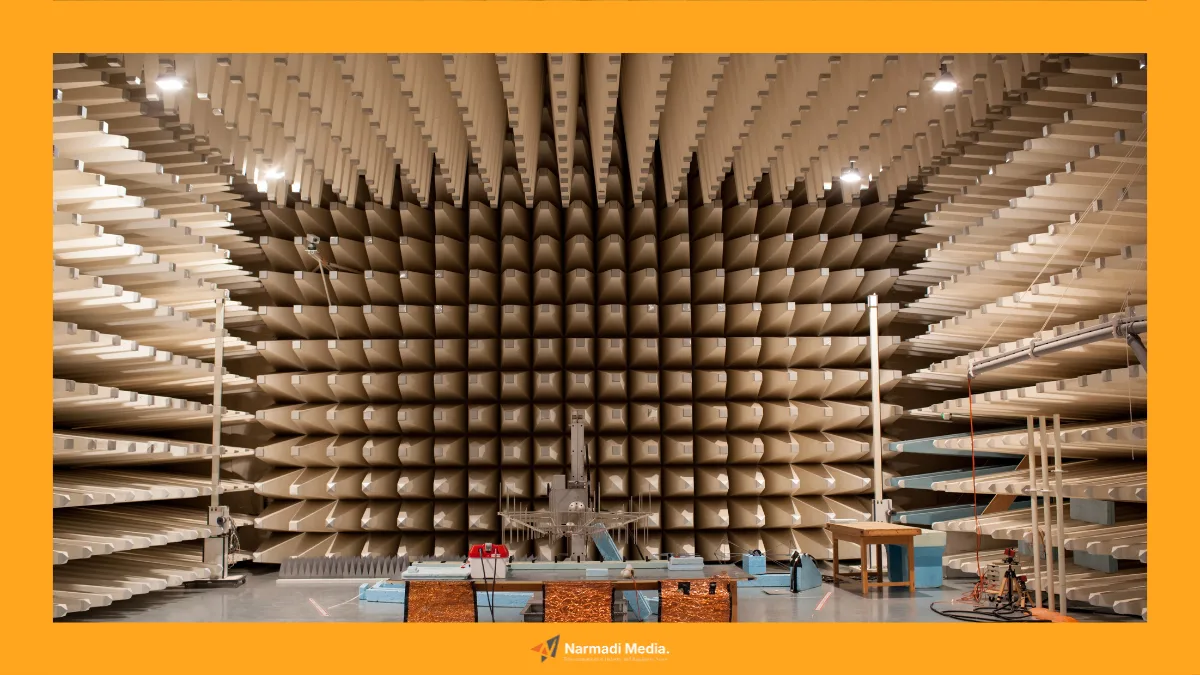
When discussing local testing for Indonesia type approval, testing laboratories are an integral part of the process. As previously mentioned, local testing is not the only option available.
This means that you can also conduct testing at international laboratories that are registered and accredited by DJID. Furthermore, test reports and summaries must be attached to the certification application process.
The designation of Indonesian and foreign testing laboratories is specified in Ministerial Regulation No. 16 of 2018. This regulation includes a list of Indonesian and foreign laboratories that are registered and accredited by DJID.
It is important to note that each lab has its own testing capabilities. Therefore, a single device can be tested at one lab or at several different labs.
List of Indonesian Laboratories
The following is a list of laboratories that can be used for local testing for Indonesia type approval:
| No | In-Country Lab Name | Address | Testing Scope |
| 1 | Balai Besar Pengujian Perangkat Telekomunikasi (BBPPT), Direktorat Jenderal Sumber Daya dan Perangkat Pos dan Informatika | Jalan Raya Tapos No. 46 Tapos, Depok 16457 | Electrical Safety, EMC, RF |
| 2 | PT. Hyundai Calibration and Certification Technologies Indonesia | Jalan Terusan I Gusti Ngurah Rai Nomor 10, RT.10/RW.11, Kel Pondok Kopi, Kec. Duren Sawit, Jakarta Timur | RF, EMC, Electrical Safety |
| 3 | Laboratorium PT. TUV Rheinland Indonesia | Infinia Park Blok A56, B92-93, JL. DR. Sahardjo No. 45 Jakarta 12850 | Electrical Safety (Leaked Current and Overvoltage) |
| 4 | Laboratorium Penguji PT. Qualis Indonesia | Jl. Pajajaran No.17 Desa Gandasari Kec. Jati Uwung Tangerang Banten 15137 | EMC, SRD, Bluetooth, WLAN 2.4 GHz, WLAN 5.8 GHz, RF |
| 5 | Laboratorium Penguji PT. Hartono Istana Teknologi, Sub Lab Electronic & RF | JL. KHR. ASNAWI PO. BOX 126, BAKALAN KRAPYAK, KALIWUNGU, KUDUS, JAWA TENGAH 59332 | RF |
| 6 | Laboratorium Sentral Operasi Cibitung PT. Sucofindo (Persero) | Jln. Arteri Tol Cibitung No 01 Cibitung Bekasi 17520 | Electrical Safety, Perangkat HF/VHF/UHF, Seluler (GSM, WCDMA, LTE), Receiver DVB-T2, Bluetooth, WLAN, Laser Safety |
| 7 | Laboratorium Elektronika dan EMC Balai Besar Bahan dan Barang Teknik (B4T) | Jl Sangkuriang No.14 Bandung, Jawa Barat 40135 | EMC, Electrical Safety, Seluler (GSM, WCDMA, LTE), Bluetooth, WLAN, SRD |
| 8 | Laboratorium Pengujian PT. Bureau Veritas Consumer Products Services | Gedung KKM Lantai 3, Jalan Cideng Timur No. 38, Gambir Jakarta 10130 Indonesia | Seluler (GSM, WCDMA, LTE), Bluetooth, WLAN, Receiver DVB-T2, SRD, RF, Electrical Safety |
| 9 | Laboratorium Penguji PT. Hartono Istana Teknologi, Sub Lab Electronic & RF | JL. KHR. ASNAWI PO. BOX 126, BAKALAN KRAPYAK, KALIWUNGU, KUDUS, JAWA TENGAH 59332 | Seluler (GSM, WCDMA, LTE), Bluetooth, WLAN, Receiver DVB-T2, LPWA, Electrical safety |
| 10 | Balai Standardisasi dan Pelayanan Jasa Industri (BSPJI) | Jl. Jagir Wonokromo No. 360 Surabaya, Jawa Timur 60244 | EMC, Electrical safety |
Overseas laboratories
The list of overseas laboratories recognized by DJID is regulated in Ministerial Decree No. 13 of 2025. In this regulation, there are 103 overseas testing centers that can be used for sample testing.
For a list of international laboratories registered and accredited by DJID, you can check the following link: https://sertifikasi.postel.go.id/balai-uji/balai-uji-ln
When conducting testing at an international laboratory, it is important to verify the location, technical standards, and scope of testing offered by the laboratory.
You need to ensure that the testing laboratory used is in accordance with the list. This is because the name of the laboratory used may be the same as the testing laboratory on the list, but the address of the testing laboratory may be different.
Testing must also be carried out in accordance with the technical standards set by DJID. Additionally, ensure that the overseas testing laboratory conducts testing based on its testing scope.
Full Local Testing Plan in 2027
Currently, local testing for Indonesia type approval is not the only route that can be taken. However, the Indonesian government, through the Minister of Communication and Digital Affairs (KOMDIGI), Meutya Hafid, has stated that it plans to conduct all local testing on telecom and wireless devices for DJID certification.
The plan to conduct all local testing for Indonesia type approval will certainly have an impact on manufacturers. You must be prepared to face changes in compliance procedures.
All local testing on telecom and wireless devices for DJID certification will be carried out in stages until the end of 2026. It is expected that by 2027, local testing for Indonesia type approval will become mandatory.
This is being done to reduce dependence on foreign testing laboratories. Additionally, it will strengthen and encourage the independence of the domestic Information and Communication Technology (ICT) industry.
Finally, the question of whether local testing for Indonesia type approval is mandatory has been answered. Local testing is currently not the only route that can be taken, but it is recommended.
Overseas lab testing can be carried out through document evaluation by attaching the test results and summary. However, it must be ensured that the overseas lab has a location that is in accordance with the DJID list, meets technical standards, and has the same testing coverage.
Problems with local testing for Indonesia type approval can cause delays in the application process. To avoid this problem, you can consult with Dimulti.
We are ready to assist you with your RF type approval issues with a team of professionals who have more than 15 years of experience. Your certification process will be effective and efficient with pre-testing services that can be monitored in real time. In addition, we have an international network that can help you penetrate the global market.