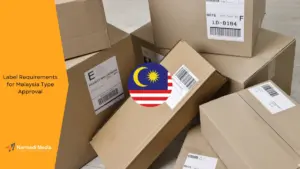

Manufacturers need to be aware of the sample requirements for Malaysia type approval. This is one of the requirements if local testing is required for the SIRIM certification process.
The sample requirements for Malaysia type approval are necessary to test whether telecommunications devices meet the specified criteria. In this case, the requirements are set by SIRIM, the Standard and Industrial Research Institute of Malaysia, which regulates the approval process for telecommunications equipment entering and circulating in the country.
Frequently asked questions regarding sample requirements for Malaysia type approval include how many samples are needed and what the criteria are. We will answer these questions thoroughly in this article.
Also Read
What is a Test Sample?
Test samples are telecommunications or wireless devices that will be used for laboratory testing in the SIRIM certification process. Test samples are required when local testing for Malaysian type approval is needed.
Although not recommended and common in the SIRIM certification process, local testing is often still required. This route is usually only required for devices that have cellular features, IPv6, and test results from international laboratories that do not meet Malaysian regulatory standards.
During testing, samples will be measured to ensure their compliance with applicable technical standards. Sample requirements for Malaysia type approval will depend on the testing requirements.
What Are the Testing Processes?
Sample requirements for Malaysia type approval will be used to conduct several types of testing. The type of testing will depend on the product and the technical regulations that govern it.
The following types of testing must be conducted:
- Radio Frequency (RF) Testing: This process is conducted on devices that use radio frequencies to evaluate wireless signal transmission.
- Electromagnetic Compatibility (EMC) Testing: A testing process for devices to ensure that they do not interfere with other devices.
- Safety Testing: Ensuring that the device is safe to use for equipment and power adapters.
The entire process can be carried out in 3 local laboratories that have been accredited by SIRIM.
- SIRIM QAS International
- TÜV NORD AG
- TÜV Rheinland Malaysia Sdn. Bhd.
How Many Samples Are Required?
The number of samples required for Malaysia type approval depends on the evaluation required. In general, four units are required (for certification, communication testing, safety testing, and EMC testing).
However, for devices with cellular features, applicants for Malaysia type approval only need to submit one sample unit. Most normal mode samples are sufficient for functional verification testing.
Testing is conducted to confirm model and label verification parameters, frequency band confirmation, output power inspection, connectivity inspection, and basic operation testing.
Sample Requirements for Malaysia Type Approval
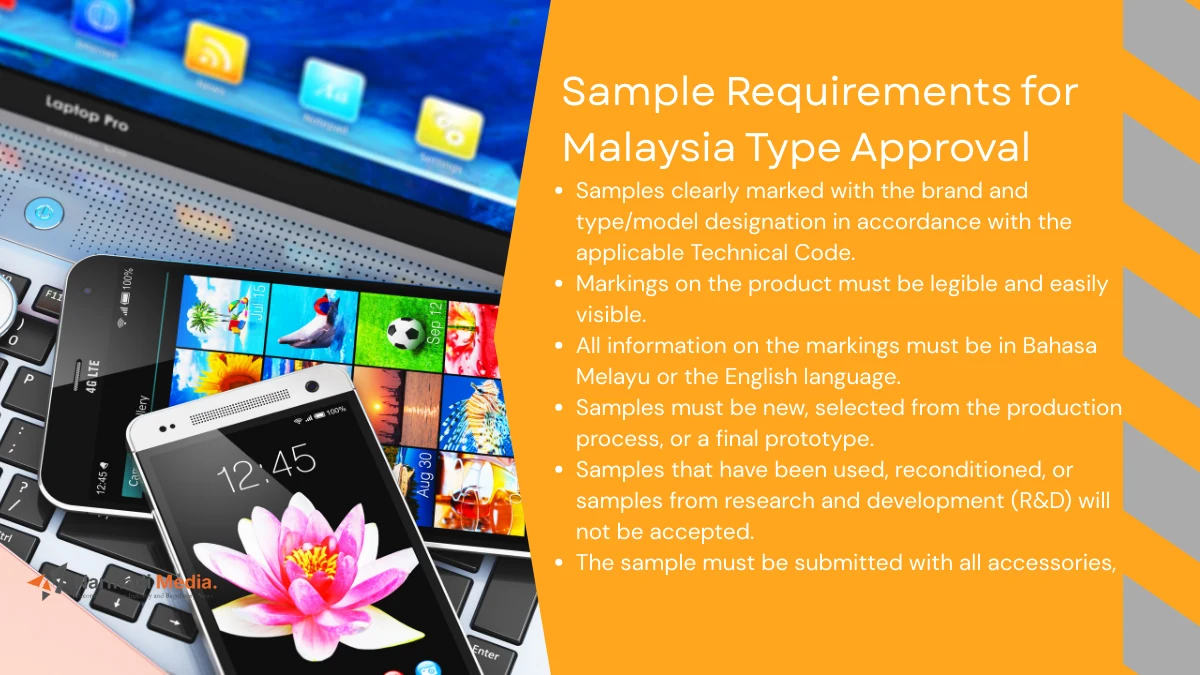
Sample requirements for Malaysia type approval refer to eTAC/DOC/01-1.1, Article 7. It is explained that applicants are required to submit complete samples clearly marked with the brand and type/model designation in accordance with the applicable Technical Code.
Markings on the product must be legible and easily visible. All information on the markings must be in Bahasa Melayu or the English language. Samples must be new, selected from the production process, or a final prototype. Samples that have been used, reconditioned, or samples from research and development (R&D) will not be accepted.
The sample must be submitted with all accessories, including certified power supplies, adapters, plugs, sockets, tool connectors, interconnectors, etc., as required.
Samples submitted for evaluation must be accompanied by the following documents:
- A copy of the Certificate of Approval (CoA)
- K1 form
- SANDEC information
- Valid import documents
These documents must be in the name of the Applicant. Samples submitted without one of the above documents will not be accepted for evaluation.
Samples are submitted by the applicant directly to the Project Officer conducting the evaluation. Any special precautions required in handling the samples must also be clearly stated when applying.
It is necessary to ensure that the samples submitted are complete, in good condition, in accordance with the specified schedule, and in accordance with the model listed in the application. Any discrepancies in the samples may result in the application being canceled or only a Provisional Approval being granted.
Things to Note
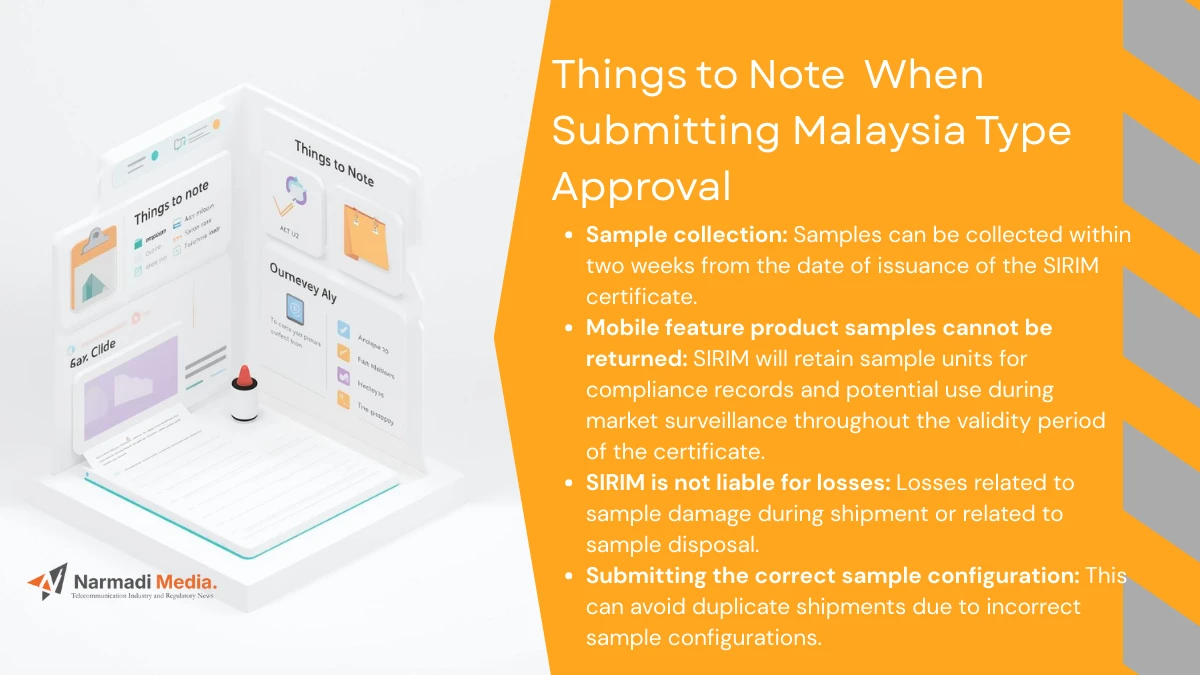
When sending sample requirements for Malaysia type approval for local testing, there are several things you need to pay attention to.
- Sample collection: Samples can be collected within two weeks from the date of issuance of the SIRIM certificate. If samples are not collected within this period, SIRIM reserves the right to dispose of the samples in a manner it deems appropriate.
- Mobile feature product samples cannot be returned: SIRIM will retain sample units for compliance records and potential use during market surveillance throughout the validity period of the certificate.
- SIRIM is not liable for losses: Losses related to sample damage during shipment or related to sample disposal.
- Submitting the correct sample configuration: This can avoid duplicate shipments due to incorrect sample configurations. That way, you can reduce unnecessary costs caused by duplicate sample shipments.
Those are the sample requirements for Malaysia type approval. You need at least four samples for certification, communication testing, safety testing, and EMC testing. For mobile devices, only one sample is required for functionality verification testing.
Problems with test samples can cause delays in the certification testing process. This can be caused by incorrect samples, insufficient samples, or sample conditions that do not match the model listed in the application. To avoid these problems, you can consult with Dimulti.
With a team of professionals with over 15 years of experience, we are ready to help you overcome RF type approval issues effectively and efficiently. We offer pre-testing services to reduce the risk of failure in the laboratory, real-time monitoring of the certification process, and an international network to help you penetrate global markets.