
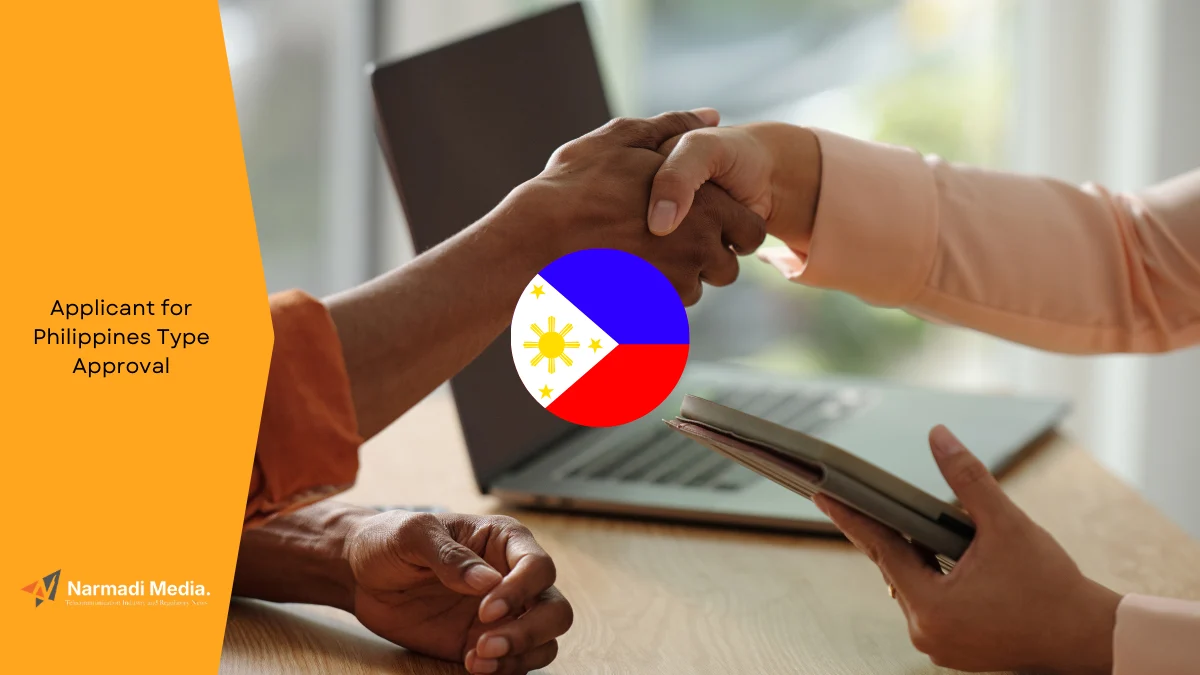
Understanding the applicant for Philippines type approval is crucial for marketing telecom and wireless devices in the country. This entity is responsible for securing NTC certification.
The requirements for applicant for Philippines type approval are set by the National Telecommunications Commission (NTC). This authority, an agency under the Department of Information and Communications Technology (DICT), regulates all requirements for obtaining certification.
Applicant for Philippines type approval must ensure that their devices meet established safety and quality standards. So, who can apply for NTC certification? This article explains the requirements to help you better understand the applicant criteria.
Also Read
Why Applicant Status is Important?
The primary requirement for obtaining compliance approval is the applicant. Therefore, it’s crucial to understand the applicant status for the Philippines type approval.
This will help you determine which entities are permitted to apply for certification in this country. Failure to meet the applicant status criteria can result in your certification application being rejected, even before evaluation.
This article will answer whether foreign companies are permitted to register as certification applicants, whether the applicant and producer must be the same entity, and the role of the local representative.
Furthermore, it’s important to understand that certification applicants will ultimately be solely responsible for the entire Philippines type approval process. Therefore, they must thoroughly understand the document requirements for Philippines type approval.
Application Scheme in the Philippines
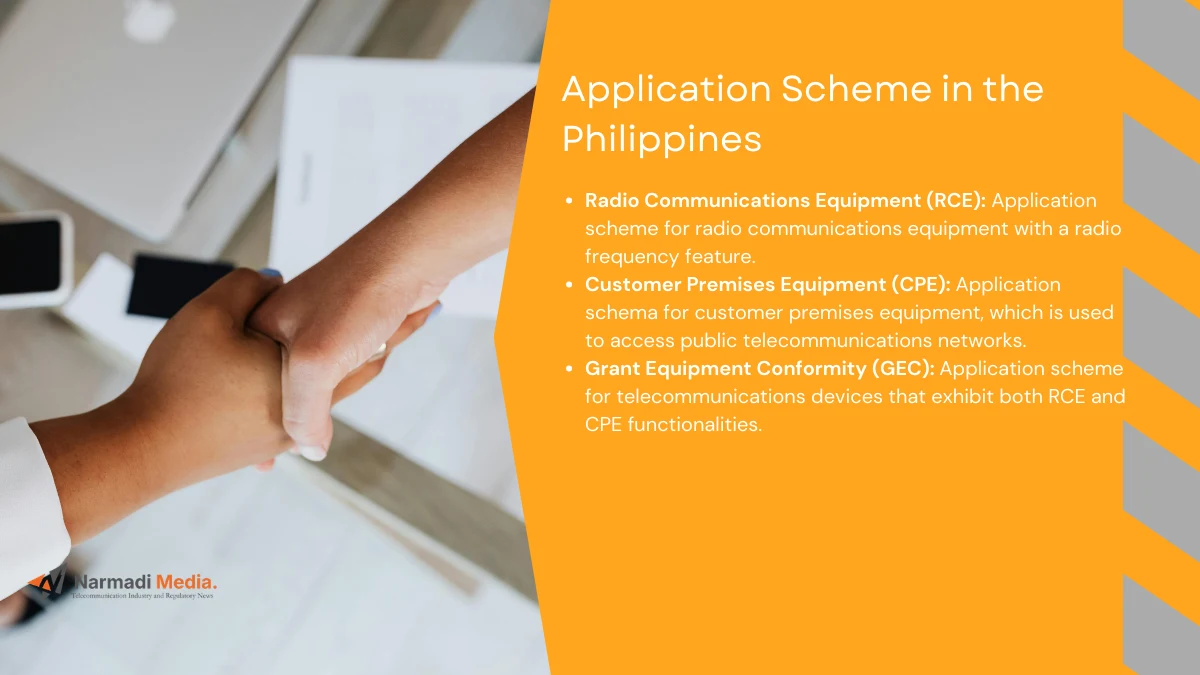
Before understanding who should be an applicant for Philippines type approval, it is essential to understand the certification schemes required to market products in the country. There are three: Radio Communications Equipment (RCE), Customer Premises Equipment (CPE), and Grant Equipment Conformity (GEC).
- Radio Communications Equipment (RCE): Application scheme for radio communications equipment with a radio frequency feature.
- Customer Premises Equipment (CPE): Application schema for customer premises equipment, which is used to access public telecommunications networks.
- Grant Equipment Conformity (GEC): Application scheme for telecommunications devices that exhibit both RCE and CPE functionalities.
Applicant for Philippines Type Approval
The Philippines has slightly different regulations from its neighboring countries regarding certification applicants. In this country, foreign companies are allowed to apply for certification. This requirement certainly makes things easier for prospective applicants.
The applicant and manufacturer are expected to be the same entity. This simplifies the Philippines type approval certification process, as this information will be included on the final certificate.
However, the NTC also allows the applicant and manufacturer to be different entities, provided the applicant has an official partner in the Philippines.
Applicant
The applicant for Philippines type approval is the party responsible for managing the certification process from start to finish. They will also be listed on the final certificate.
The applicant can be a foreign manufacturer, a domestic manufacturer, or an official partner in Vietnam. If the applicant and manufacturer are the same entity, obtaining the certificate will be easier. However, if they are different, the foreign manufacturer, as the applicant, can choose an official partner in Vietnam to act as a representative.
Manufacturer
A manufacturer is an entity that produces telecom or wireless equipment. It can be a domestic or foreign company. In the Philippines, both local and foreign manufacturers can act directly as certificate applicants.
Official partner
An official partner is a Vietnamese company that can act as an applicant for a foreign company. This is typically used by manufacturers who want to avoid the hassle of the certification process in the Philippines.
Since the process is not yet online, the entire process requires a representative to visit the NTC office. This is where the official partner can act as the applicant’s representative throughout the certification process.
The official partner will also be listed on the certificate. The appointment of this official partner also requires the manufacturer to issue a power of attorney.
Tips for Applicant NTC Certification
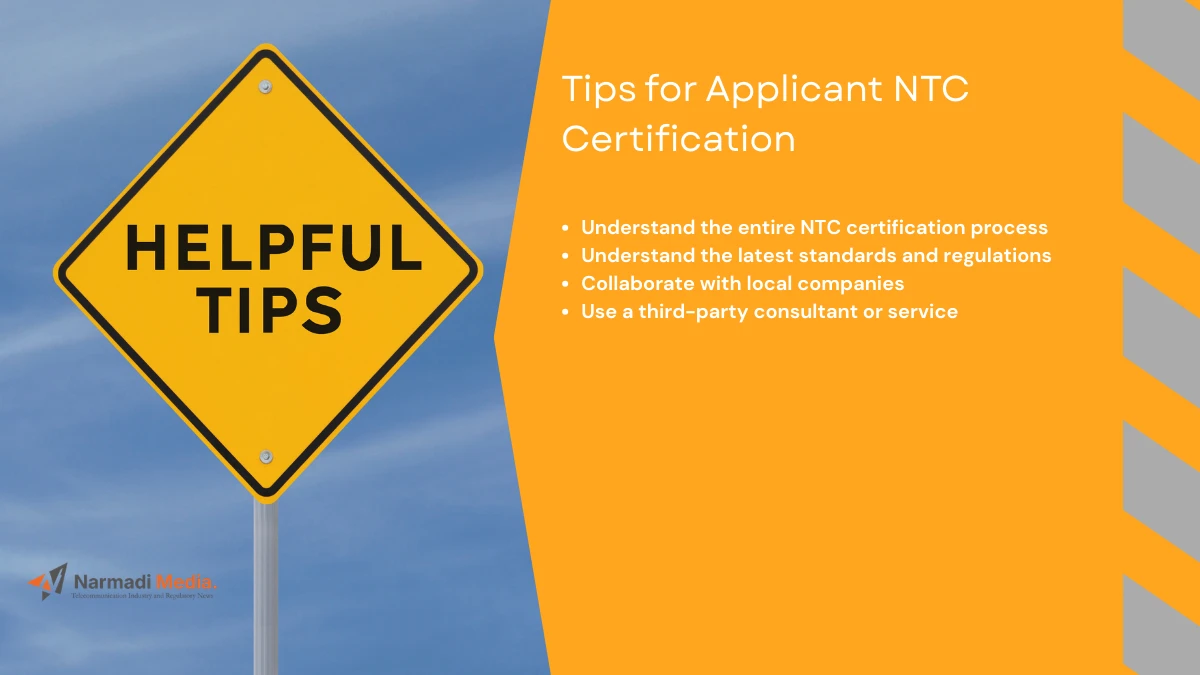
To simplify your application for Philippines type approval, consider the following tips:
- Understand the entire NTC certification process: Vietnam has a different certification scheme, so a thorough understanding of this process is crucial.
- Understand the latest standards and regulations: Applications must comply with current Philippine standards and regulatory requirements.
- Collaborate with local companies: While foreign manufacturers are welcome to apply for certification, partnering with a local company will simplify the offline certification process.
- Use a third-party consultant or service: Certification service providers like Dimulti can help you address all of the above points, making the certification process more effective and efficient.
Those are the details regarding applicant for Philippines type approval. To apply for certification, applicants can be local producers, foreign producers, or local partners. In the Philippines, foreign producers are permitted to apply for certification.
If you don’t want the hassle of the offline certification process in the Philippines, there’s the option of a local partner who can apply for certification. The requirement is simply to submit a power of attorney from the producer appointing the selected local company.
Anyone intending to apply for the Philippines type approval must clearly understand these requirements. A lack of understanding can certainly hinder the certification process. Avoid these problems by consulting with Dimulti.
We have over 15 years of experience understanding RF approval issues. Transparency is our priority in every application. You can monitor the process in real time through our Project Management System (PMS).
With partners in various countries, we understand how to manage your certification process effectively and efficiently. This will help you access the global market with confidence.