
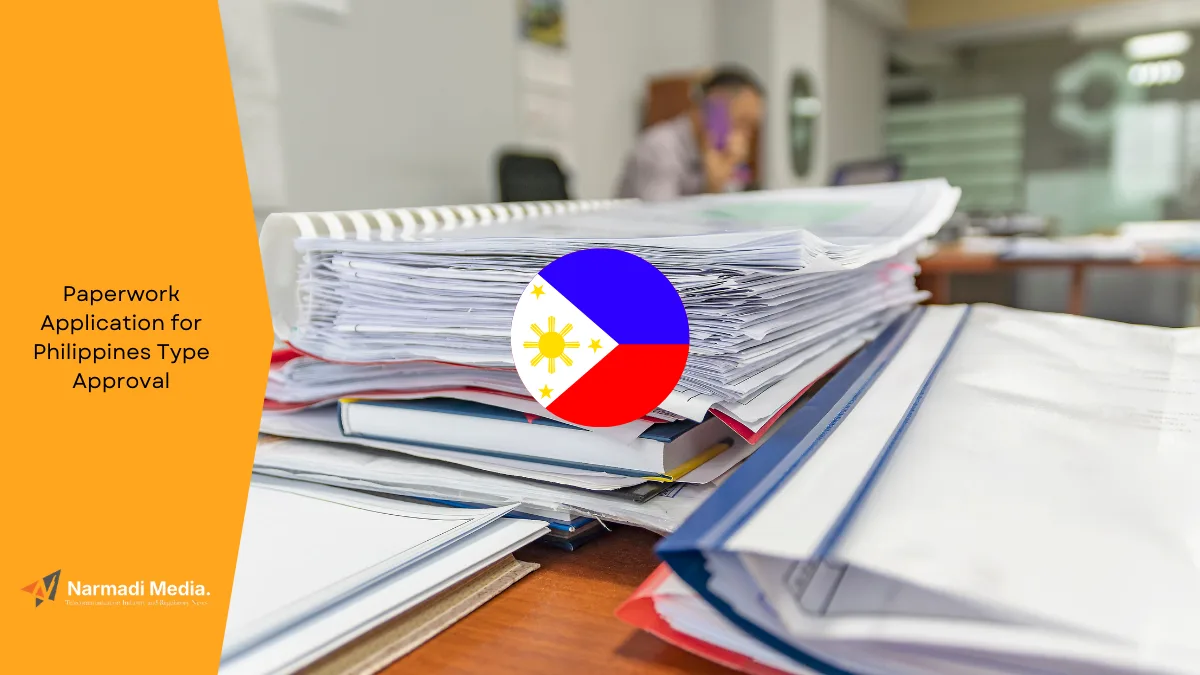
Manufacturers need to understand the procedure of paperwork application for Philippines type approval. This is the only pathway to apply for NTC certification. This is because local testing is not available in the Philippines.
The paperwork application for Philippines type approval requires several requirements. These criteria are set by the National Telecommunications Commission (NTC). This authority regulates all requirements for obtaining certification.
The process of paperwork application for Philippines type approval is not as fast as in neighboring countries. This is because the process is still conducted offline at the TNC office. Therefore, a thorough understanding of this process is crucial.
Also Read
What is the Paperwork Application for RF Type Approval?
Paperwork or document evaluation is a Radio Frequency (RF) type approval process that generally applies in countries that do not require local testing, such as the Philippines. In other words, this process only requires the submission of test report from an international laboratory.
Each country has its own regulations regarding the application process. In general, tests conducted by the laboratory must meet applicable international standards.
It is also important to ensure compliance with the destination country’s requirements regarding frequency usage, power levels, and emission limits. Typically, each country’s authorities maintain a list of registered and accredited international laboratories. In the Philippines, a paperwork application is recommended for the NTC certification process.
Is Local Testing for Philippines Type Approval Mandatory?
Local testing for Philippines type approval is not mandatory because the NTC only requires paperwork. Therefore, the NTC only accepts test report from foreign laboratories that meet applicable international standards.
The absence of local testing requirements certainly simplifies the process for applicants. However, while the Philippines paperwork process does not require local testing, it still takes longer compared to some neighboring countries.
The requirement to have test report from an international lab certainly raises additional questions. What if you don’t have them yet? Don’t worry, if you don’t have test report from a foreign laboratory, Dimulti’s services will help you obtain them.
Sample requirements for Philippines type approval
Due to the lack of local testing, submitting samples for the type approval process in the Philippines is not mandatory. Samples are only required if overseas test reports have not yet been completed.
The number of samples required will depend on the testing requirements and policies of the laboratory used. This all depends on the testing requirements for the proposed device.
Foreign Laboratory Testing Requirements
Local testing is not mandatory in the Philippines, it is important to understand the requirements for foreign laboratories. The conformity assessment of foreign laboratories for the paperwork application for Philippines type approval must present the test report of equipment tests conducted in accordance with NTC Standards.
Laboratories do not need to be specifically registered with the Philippine authorities. However, they must hold international accreditation based on ISO/IEC 17025. These testing standards generally align with Conformité Européenne (CE) or Federal Communications Commission (FCC) requirements.
Therefore, any laboratory worldwide that meets NTC accreditation and standard requirements can be used to conduct testing. Importantly, the laboratory must be able to meet Radio Frequency (RF), Electromagnetic Compatibility (EMC), and laser safety testing standards.
Paperwork Application for Philippines Type Approval
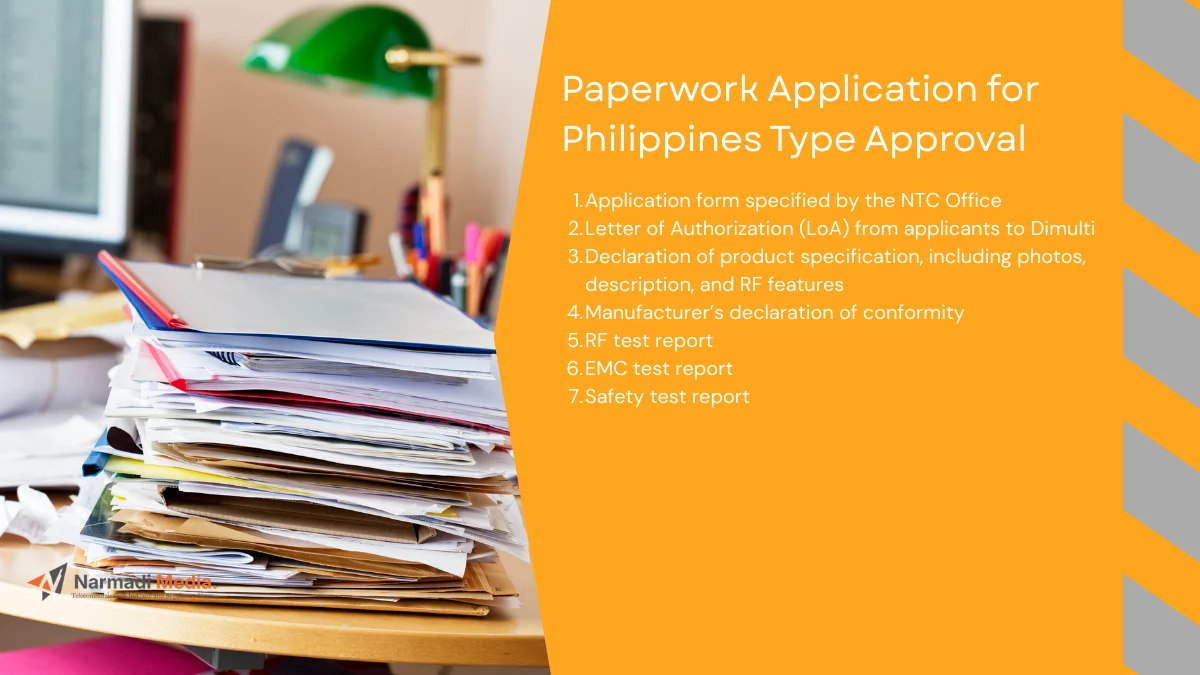
Submission of documents is subject to strict document requirements for Philippines type approval. The document processing process requires several documents to be prepared before submitting the application.
In general, each NTC certification scheme, Radio Communications Equipment (RCE), Customer Premises Equipment (CPE), and Grant Equipment Conformity (GEC), requires similar documentation. The following are some of the documents required that must be submitted by the applicant for Philippines type approval:
- Application form specified by the NTC Office
- Letter of Authorization (LoA) from applicants to Dimulti
- Declaration of product specification, including photos, description, and RF features
- Manufacturer’s declaration of conformity
- RF test report
- EMC test report
- Safety test report
Once all the documents have been collected, they must be submitted directly to the NTC office. Submission of these documents is accompanied by payment for the evaluation application. The submitted documents will then be reviewed by the authorities.
After the evaluation, the NTC will respond by issuing a response, whether the certification application is approved or rejected. If the evaluation is successful, you will need to return the payment for the certificate issuance. If the evaluation is unsuccessful, you will need to complete the missing documents and resubmit them for re-evaluation.
The paperwork application for Philippines type approval is the only pathway for certification applications. However, if you do not yet have test report from a foreign laboratory, Dimulti can help you plan the testing.
If testing is required, samples must be submitted as required. The number of samples depends on the testing requirements and laboratory policies.
Document evaluation is conducted only by attaching test report from the foreign laboratory. The laboratory must be internationally accredited according to ISO 17025 standards and comply with FCC or CE standards.
The process may be delayed if there are issues with the paperwork application for Philippines type approval. To avoid such delays, you can contact Dimulti for further consultation.
With over 15 years of experience, we are ready to assist you with your RF type approval issues with our professional team. Your certification process will be handled effectively and efficiently, supported by real-time monitoring and an international network to help you access the global market.