
Compliance approval is a requirement for selling telecom and wireless devices in every country, including Japan. Therefore, it’s crucial to understand how to obtain Japan type approval certification to gain market access.
The Japanese telecommunications market is a strong global market. It is highly mature, competitive, and boasts high mobile penetration. This is due to strong internet growth driven by the adoption of 5G, IoT, digital transformation, and demand for high-speed internet. Therefore, Japan type approval guidelines are necessary for marketing these products.
Japan type approval is also known as MIC certification. Before marketing and using their products in Japan, manufacturers, importers, and distributors must first understand the entire certification process.
Also Read
What is Japan Type Approval?
MIC stands for “Ministry for Internal Affairs and Communication.” Before 2024, they was known as the Ministry of Public Management, Home Affairs, Post, and Telecommunications (MPHPT).
MPHPT is the result of a merger of the “Ministry of Post and Telecommunications,” “Ministry of Home Affairs,” and “Management and Coordination Agency.”
In the telecommunications sector, MIC plays a role in establishing certification regulations, collaborating with Registered Certification Bodies (RCBs), and implementing Mutual Recognition Agreements (MRAs). It also oversees Japan’s type approval certificates.
Unlike some other Asian countries, Japan does not conduct its own testing or issue certificates. MIC appoints RCBs to conduct testing and issue certificates.
MIC certification is required for every telecommunications and wireless product manufactured, imported, distributed, or used in Japan. This certification ensures that the device meets the technical, compatibility, and safety standards required by applicable regulations.
The certificate not only serves as proof that the product meets requirements but is also used for customs clearance during import.
Scope of Products Requiring Certification
Japan Type Approval is divided into five classifications: Specific Radio Equipment (SRE), Special Specific Radio Equipment (SSRE), Telecommunications Terminals, High Frequency Devices (HFD), and Ultra Low Power Devices (ELP).
Basically, MIC certification is required for all telecommunications and non-telecommunications equipment operating using radio frequencies. Here are some examples of products requiring Japan Type Approval:
| Clasification | Definition | Products |
| SRE | Devices that intentionally emit radio frequencies (RF) for communication purposes. | – RFID readers – Zigbee equipment – Drones – Bluetooth speakers – Radio-controlled toys – Bluetooth headphones – Wireless microphones – Smartphones – WiFi routers – Bluetooth devices – Etc |
| SSRE | Devices with lower power consumption than SREs are considered to have a lower risk of causing interference. | – Bluetooth Low Energy Trackers – Low Power Equipment (LPE) – Short Range Devices (SDR) equipment – Etc |
| Telecommunications terminal | A device that connects physically or wirelessly to a public telecommunications network. | – Analog telephone – Fax machine – DSL modem – LTE gateway – Smartphone – Mobile data terminal – IP phone – Broadband router – Etc |
| HFD | A device that emits high-frequency radio signals that can be used in various fields such as industry, medicine, and science. | – Induction cookers – RF welders – Industrial heating systems – Microwave ovens |
| ELP | Devices that emit radio frequency signals with power or field strength lower than the legally established field strength threshold. | – Toys with BLE – RFID tags – Key fobs – Etc |
Who Should Be an Applicant?
Applicants for Japan type approval must be registered local companies. They can be manufacturers, importers, or distributors.
Foreign companies cannot apply for certification directly unless they have established a company in Japan acting as an importer or distributor. Otherwise, they must appoint a local company to act as the importer or distributor.
Certification Process
The Japan Type Approval process requires local testing as the sole means of applying for certification. This means the testing must meet Japanese laboratory standards.
Local testing requires sample submission. The number and type of samples will depend on the device’s features and the type of testing required.
1. Local testing
Local testing for Japan Type Approval is a mandatory method. This method requires applicants to submit samples for testing at a local laboratory belonging to a designated CB in Japan.
This process involves various types of testing, including:
- Radio Frequency (RF) Test
- Electromagnetic Compatibility (EMC) Test
- Safety Test
The type of testing depends on the product type. Testing may vary for each product. All of these tests will require samples to be used.
Generally, we only need to provide one standard sample with the appropriate accessories. However, for some products, additional samples with special settings may be required. We will consult with experts and the laboratory if your product requires different samples.
In addition to samples, obtaining Japan Type Approval also requires several documents. The following documents are required:
- Test report
- User manual (Japanese version)
- Antenna specifications
- Component layout diagram
- Parts list and circuit diagram (RF section)
- Block diagram
- External and internal photographs
2. Evaluation process
After the local testing process and all documents are submitted to the designated CB, an evaluation process will be conducted. During this stage, all documents are checked for completeness and conformity.
If documents pass the evaluation, certification will be issued immediately. However, if they fail, you will need to address any deficiencies or errors and resubmit to the relevant CB.
3. Certificate issuance
If a telecommunications device application passes the evaluation, an MIC certificate will be issued by the Certification Body (CB). The entire certification process, from local testing to certificate issuance, takes three to four weeks.
MIC certificates have no expiration date, meaning they can continue to be used as long as no modifications are made to the RF features. Devices with modified RF features must undergo retesting because modifications can affect compliance with applicable technical standards in Japan.
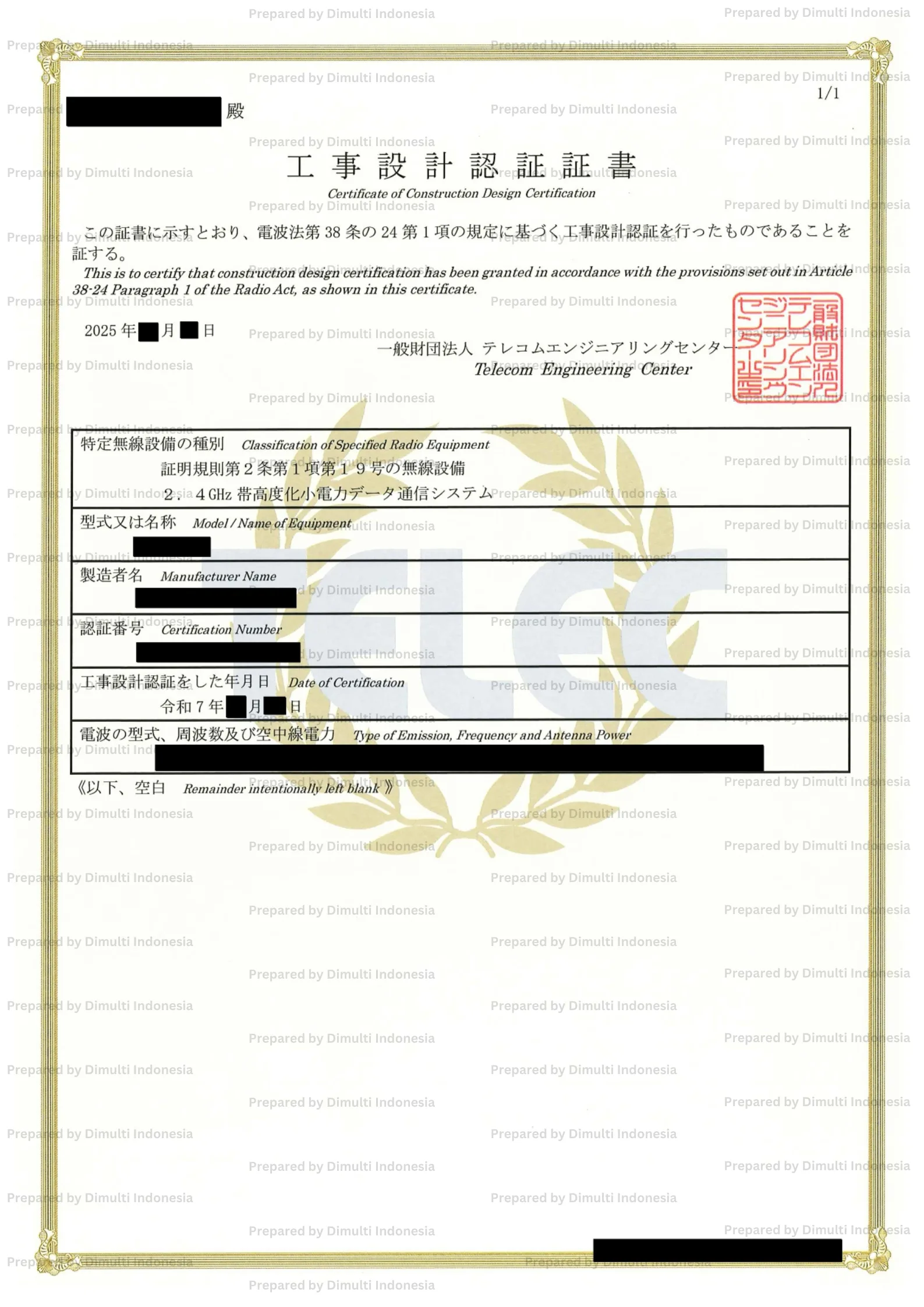
The following is an example of an MIC certificate issued by the Telecom Engineering Center (TELEC) certification body:
4. Label requirements for Japan type approval
All telecommunications and wireless devices that have passed Japan type approval certification must be labeled. Labeling requirements for MIC certification require the affixation of a compliance label to the product.
The label must be placed in a large, visible area, making it easy for the purchaser to find. Attaching the label to the user manual or as an electronic label is permitted if the device is too small to accommodate a label. However, the use of an electronic label requires special permission from the MIC.
The MIC label format is determined by the device classification: Specific Radio Equipment (SRE), Special Specific Radio Equipment (SSRE), Telecommunications Terminal, High Frequency Device (HFD), and Extremely Low Power Device (ELP). Each device classification has its own label format.
For SRE, SSRE, and Telecommunications Terminal, it is called the Giteki mark. For HFD and ELP classifications, there is no specific label designation.
1. Giteki label
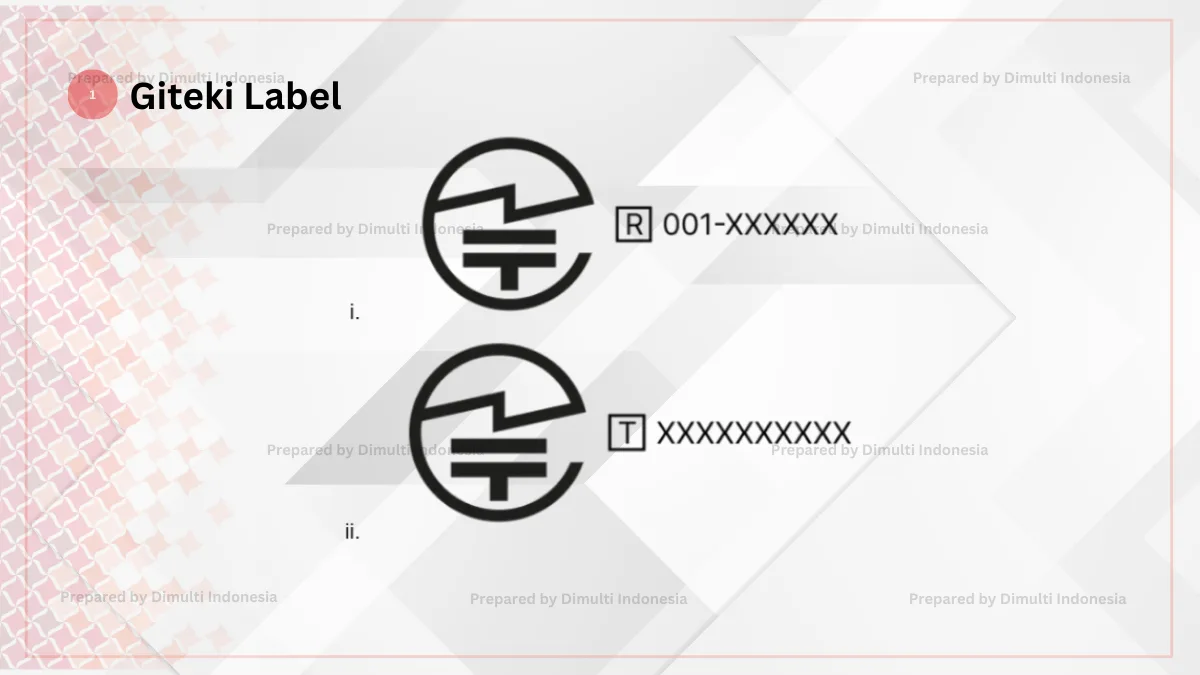
The Giteki label has two categories: “R” and “T.” The R symbol: Applied to SRE and SSRE products, or products that intentionally emit RF signals. The T symbol: Applied to devices directly connected to the public telecommunications network.
In addition to the R and T markings, the Giteki label includes a number code that includes the device type, certification year, and CB certificate number. Here is an example of a label:
2. HFD label
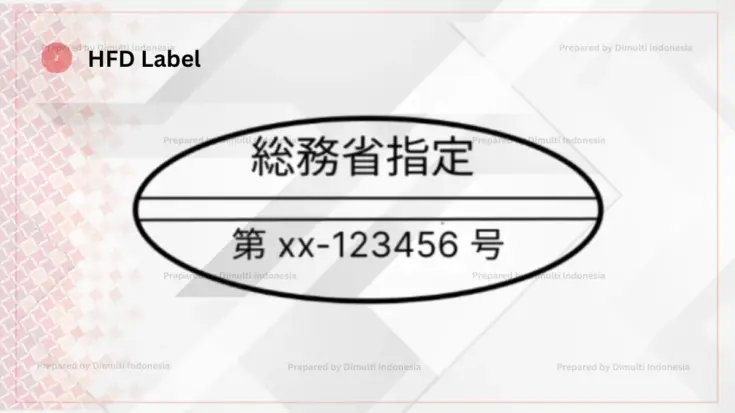
The HFD label is intended for non-communication devices that emit RF energy for scientific, industrial, or medical use. Here is an example of a label:
3. ELP label
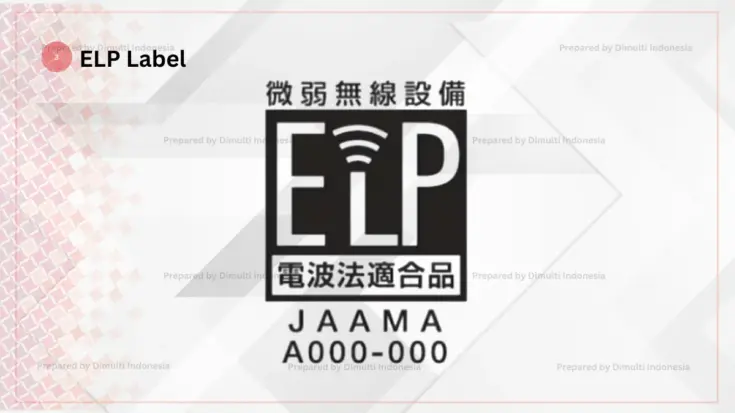
The ELP label is intended for devices that emit RF signals that can be categorized below the field strength thresholds specified by Japanese law. Here is an example of a label:
MIC Certification Management Services
The MIC certification process, with Japan’s well-established system, may seem straightforward. Moreover, the process isn’t as lengthy as in other countries that also go through local testing processes.
However, in practice, the Japanese type approval process isn’t as straightforward as the theory suggests. Therefore, you need Dimulti to help you navigate the confusion surrounding RF and telecommunications type approval certification.
We offer extensive experience, an international network, initial testing services, and real-time process monitoring.
1. Extensive experience
We have been assisting hundreds of clients and thousands of RF type approval projects since 2008. With this experience, we know exactly what you need to complete the certification process efficiently.
2. International network
Our over 17 years of experience have given us a strong international network. This network continues to grow with client needs. This allows us to support certification needs not only in Japan but also worldwide.
3. Initial testing services
This is a service rarely offered by other certification management services. In fact, initial testing will help you prevent failures during live testing. Our internal laboratory will assist you in conducting initial testing.
4. Real-time process monitoring
Transparency is our top priority. Therefore, we have a Project Management System (PMS) for you to transparently monitor the certification process. You can track your certification progress at every stage in real time.