
Understanding the applicant for Japan type approval is crucial for marketing telecom and wireless devices. This entity will be responsible for securing MIC certification.
The requirements for Japan type approval applicants are set by the Ministry for Internal Affairs and Communications (MIC). This agency was formerly known as the Ministry of Public Management, Home Affairs, Post, and Telecommunications (MPHPT). This authority regulates all requirements for obtaining certification.
Applicant for Japan type approval must ensure that their devices meet established safety and quality standards. So, who can apply for MIC certification? This article explains the requirements to help you better understand the applicant criteria.
Also Read
Why Is Applicant Status Important?
Meeting the status of applicant for Japan Type Approval is crucial. Your eligibility will determine whether you can apply for certification.
If you no longer meet the established criteria, your certification will be rejected and cannot be continued. To apply for certification, you must meet the criteria set by the MIC.
It’s important to note that foreign companies cannot apply for MoST certification directly to obtain MIC certification unless they already have a company in Japan acting as an importer or local supplier.
Distributors and importers play a crucial role as certification applicants. Furthermore, applicants are responsible for the document requirements for Japan type approval. This includes document preparation, local testing, and the MIC certification application process.
Applicant for Japan Type Approval
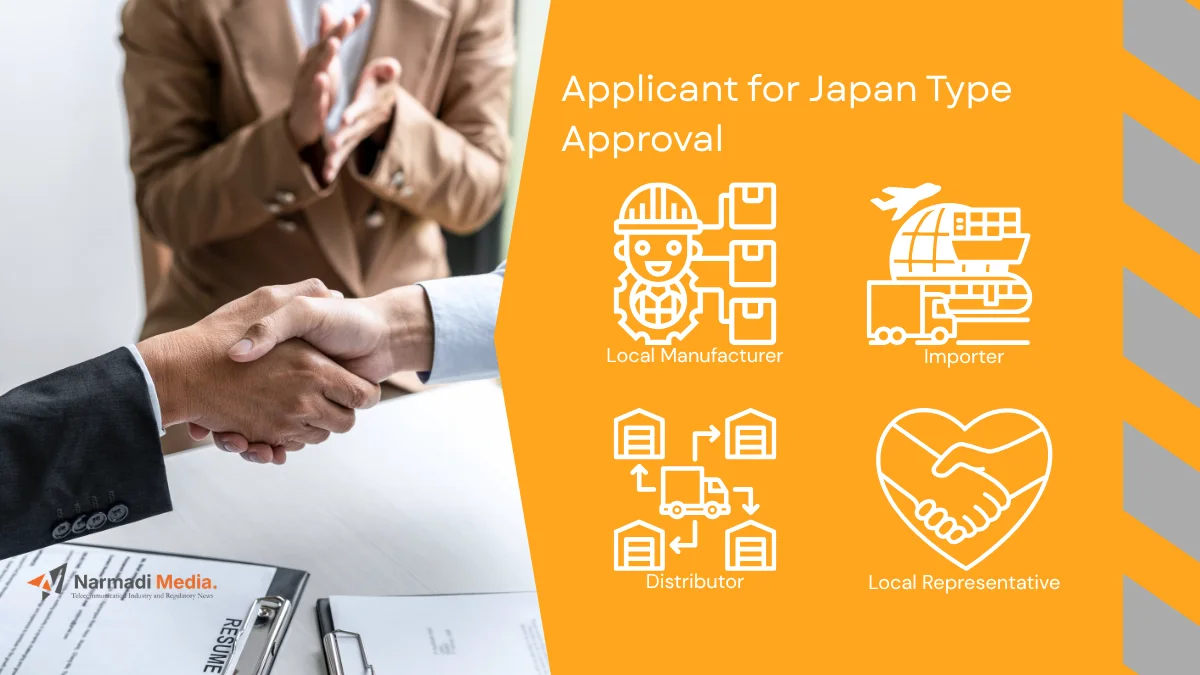
Who can be an applicant for Japan Type Approval? Japan requires that only local companies can apply for certification. These can be manufacturers, importers, or suppliers.
Foreign companies cannot initiate the certification process directly. They must appoint a registered company as their local representative, or have a company acting as their importer or supplier registered in Japan.
1. Local manufacturer
Local manufacturers are telecommunications manufacturers based in Japan. They can manufacture products domestically or operate as manufacturing facilities for foreign manufacturers based in Japan.
Local manufacturers can act directly as applicants, and they will be responsible for the entire MIC certification process.
2. Importer
The importer is the party responsible for all import requirements for goods from the brand owner to Japan. The brand will handle customs and tax issues for the goods to be traded.
Importers can be representatives of foreign companies in Japan or distributors. For importers who are representatives of foreign companies, they can act directly as representatives of the company as applicants.
3. Distributor
A distributor is the party responsible for marketing the brand owner’s products in Japan. They may or may not act as an importer. Distributors who act as importers are also responsible for the duties and responsibilities of importers.
Distributors can be representatives of foreign companies in Japan. They will represent the company as direct applicants.
4. Local representative
A local representative, in this case, is an importer or distributor appointed by a foreign company as an applicant. In this case, they can act as a local company or a subsidiary of the foreign company.
What Should Prospective Applicants Pay Attention to?
Now you know which entities can be applicant for Japan type approval. Next, as an applicant, you need to know several things to ensure the certification process runs smoothly.
1. Understanding the process
The MIC certification application process takes time, from local testing to certification issuance. While not as long as certification applications in other countries, it still requires time to follow the process.
In Japan, there are also five classifications for products requiring certification. Differences in product classifications may also result in slightly different document requirements for applications.
2. Understanding applicable standards and regulations
Standards and regulations related to certification frequently change. Therefore, it is important to stay up-to-date with the latest regulations in Japan.
This is necessary to ensure device compliance with the latest standards and regulations. If a device does not comply with applicable regulations in that country, the certification application may be rejected.
3. Using a certification consultant
By using a certification consultant, the need to understand the processes and standards applicable in a country becomes their responsibility. This is where Dimulti is here to help you.
Our professional team has experience since 2008. We will assist you through the Japanese type approval certification process and ensure the entire process runs smoothly.
We also have an international network that keeps us updated on regulatory developments. This ensures your product meets the latest standards and regulations.
Not only in Japan, but through our international network, we are ready to assist you with the RF type approval certification process worldwide.