
The digital era continues to evolve, and telecom products continue to undergo innovation. These technological developments enable the transfer of information with minimal or even no physical contact.
The speed of this technology cannot be separated from Radio Frequency (RF). Products with RF technology are increasingly widespread in the global market. To market devices internationally, they must undergo RF type approval.
Regulations regarding the distribution and use of telecommunications and wireless devices vary from country to country. Therefore, manufacturers, distributors, and importers need to understand all RF type approvals in each country to ensure smooth product trade in the international market.
What is A Radio Frequency?
Radio Frequency (RF) is an electromagnetic wave oscillation in the range of 20 kHz to 3000 GHz. This wave range is used for wireless communication, broadcasting, radar, and WiFi by transmitting electromagnetic energy through the air.
The RF frequency spectrum is a limited natural resource. Therefore, its use is regulated to ensure order and efficiency, so that devices do not interfere with each other.
Examples of RF Devices
All devices that transmit or receive radio frequencies must apply for radio frequency product certification. Examples include:
- Bluetooth devices
- WiFi routers and access points
- IoT devices such as smart sensors, smart locks, and smart meters
- RFID and NFC readers
- RF remote controls at 433 MHz / 868 MHz / 915 MHz
- Wireless chargers
- Radio-based industrial devices
What is RF Type Approval?
RF type approval is a process that every telecom and wireless manufacturer must undergo before marketing their products. As we know, the RF frequency spectrum needs to be regulated so that devices do not interfere with each other.
This process regulates compliance with technical, safety, and radio frequency compatibility standards. This is to ensure that the device is safe to use and does not interfere with existing networks.
The standards governing RF type approval refer to international regulations, such as the International Electrotechnical Commission (IEC), the Federal Communications Commission (FCC), and the European Telecommunications Standards Institute (ETSI). However, each country also has its own standards in this process.
This is because each authority in a country has its own policies regarding RF type approval certification. Therefore, a tailored compliance strategy is needed.
This process involves testing in accredited laboratories, submitting documentation, and certification by national authorities. One of the processes that must be passed is RF testing.
This ensures that all telecom and wireless products are safe and do not interfere with the functioning of other devices. In addition, the products are also ensured to emit radio frequencies in accordance with applicable regulations.
Why is RF Testing Important?
Radio Frequency (RF) testing is a series of processes that is one of the compliance requirements that must be met when applying for type approval. Every company that manufactures wireless devices or integrates wireless devices into its products must pass this test.
One of the objectives is to comply with the regulations of the target market. Additionally, RF testing is also important for several reasons:
- Detecting problems early on
- Products can be sold legally
- Gaining access to global markets
- Avoiding costly rework
RF Testing Process
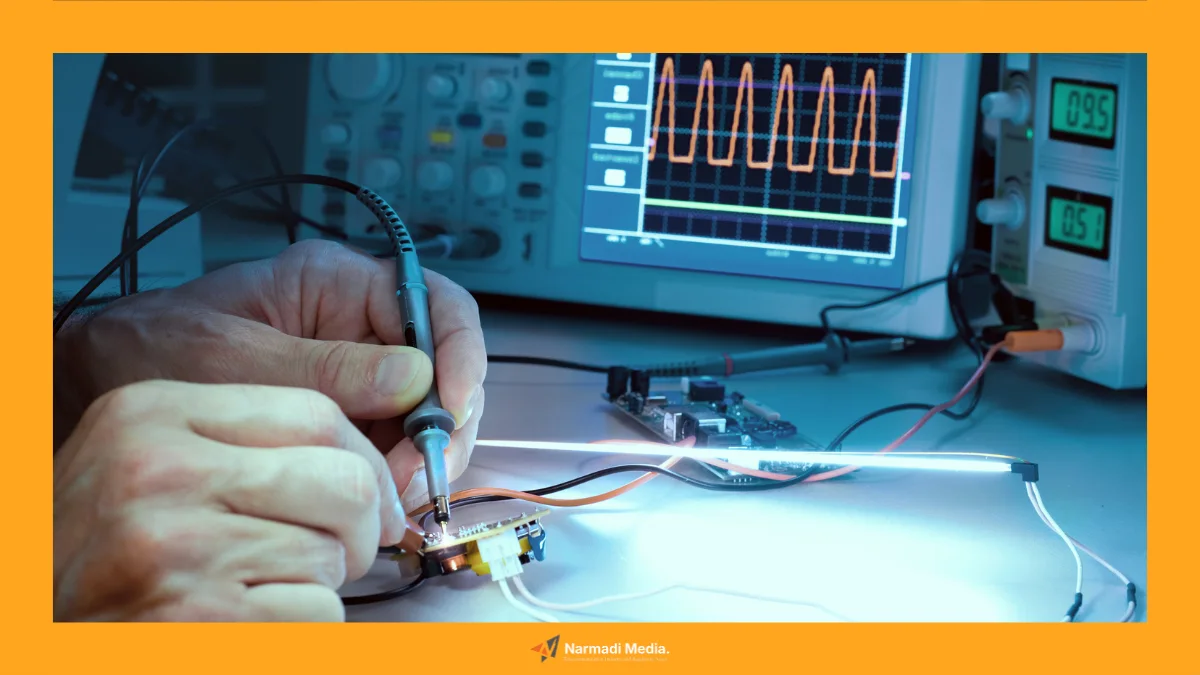
Radio Frequency (RF) testing will determine whether the device meets the specified parameters. Testing is performed by transmitting frequencies on a single channel.
The frequencies used are low and high, with continuous transmission and modulation conditions. References are based on the type of sample provided, namely, conduction samples and radiation samples. Both have different characteristics and processes.
Conducted
The testing process can be conducted in a closed or open room. Testing is carried out simply by turning on the sample device. The process is carried out by following the Testing SOP steps. These conditions are required for devices that need special configuration in order to emit radio frequencies.
The process is carried out using a spectrum analyzer that will generate test parameters. The testing process is simpler than for irradiated samples due to the ease of measurement.
The following devices need to be tested under conducted conditions:
- Bluetooth, ANT+, Zigbee, and other SRD devices operating in the 2.4 GHz frequency band
- RLAN/WLAN 2.4 GHz and 5 GHz
- RFID with frequencies of 920–923 MHz
- Cellular Networks (2G, 3G, 4G, 5G)
- LPWA/IoT
Radiated
Radiated conditions are tests for devices on samples that can directly emit radio frequencies when turned on. Radiation exposure testing at frequencies below 433 MHz must be conducted in a closed room. For frequencies above that, testing can be conducted in a standard room.
Radiated sample testing follows the same process as conducted sample testing. However, this process requires more time to generate test parameters.
The following devices need to be tested under radiated conditions:
- NFC
- SRD 125 KHz
- SRD 134 KHz
- RFID 13.56 MHz
- Low Power 433 MHz
- Radar 24 GHz
- Radar 77 GHz
Testing parameter
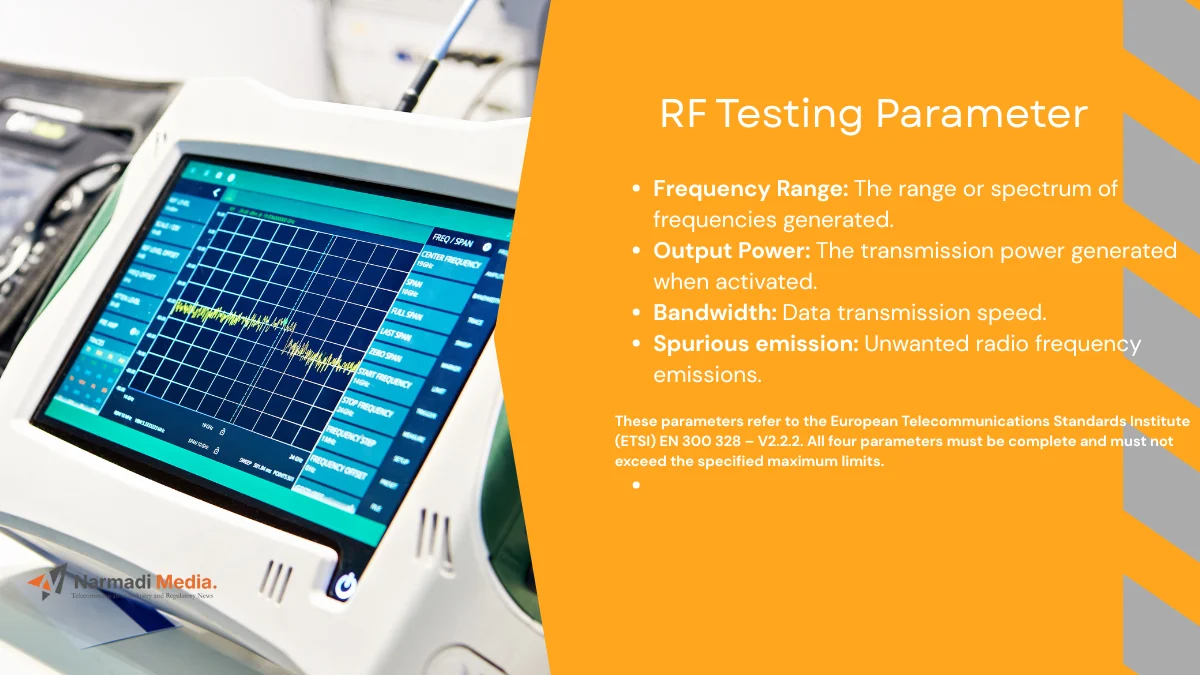
RF testing has four parameters as references. The following are the testing parameters:
- Frequency Range: The range or spectrum of frequencies generated.
- Output Power: The transmission power generated when activated.
- Bandwidth: Data transmission speed.
- Spurious emission: Unwanted radio frequency emissions.
These parameters refer to the European Telecommunications Standards Institute (ETSI) EN 300 328 – V2.2.2. All four parameters must be complete and must not exceed the specified maximum limits.
Requirements to be prepared
To obtain an RF test report, you must first prepare the requirements before testing. The requirements that must be prepared are:
- Samples: Two types of samples are required, namely, tested samples and irradiated samples.
- Documents: Technical specifications, photos, and manuals.
- Standard Operating Procedures (SOP) for Testing: Step-by-step testing guidelines, which generally contain instructions on how to send data to the device.
- Software Testing: Software used to send sample frequencies.
The above requirements are general requirements that need to be prepared. For sample testing administration, some laboratories may have slight differences depending on their respective policies. For countries that require local testing, the number of samples required may vary.
Is the RF Testing Sufficient?
To obtain RF type approval certification, RF testing is only one of the requirements. This stage ensures that every device that uses radio frequencies complies with applicable restrictions, is safe to use, and does not interfere with other devices.
Four other types of testing need to be attached as document submission requirements. The following laboratory tests need to be performed:
- Electromagnetic Compatibility (EMC) Testing: The process of testing devices to ensure that they do not interfere with other devices.
- Electrical Safety Testing: The process of ensuring that devices are safe to use.
- Laser Safety Testing: The process of testing laser-based devices.
- Specific Absorption Rate (SAR) Testing: The process of evaluating RF energy exposure to humans.
In other words, RF testing alone is not sufficient to obtain an RF type approval certificate.
Product Compliance Application Document Requirements
The following is a list of documents required to obtain an RF type approval certificate:
- Application form
- Product photos
- Product specifications
- Test reports (RF, EMC, Electrical Safety, Laser Safety, SAR)
- Declaration of Conformity (DoC)
- Memorandum of Understanding (MOU) if a Local Representative is required
These are generally the application documents that need to be submitted. Each country may have different requirements depending on the policies of its respective authorities.
RF and Telecom Type Approval Services
Entering the global market can be challenging, especially when it comes to understanding all the details. This is particularly true given the different policies of each country’s authorities. That’s why you need a partner for an RF and telecom type approval service.
Narmadi Company, as an RF and telecom type approval service, is ready to help you meet your needs. We are ready to partner with manufacturers, importers, or distributors who are unfamiliar with the radio frequency product certification process.
This way, technical issues that often become obstacles for products requiring different handling can be resolved. With our team of experienced experts, we will help you manage all aspects of the compliance certification process. Here’s what we do:
- Identify applicable standards
- Monitor regulatory changes
- Review technical documents
- Prepare application documents
- Manage communication with the relevant authorities
- Recommend design changes if necessary
- Assistance with model/variant changes
- Arranging EMC, RF, SAR, and Safety testing in nationally and internationally accredited laboratories.
- Providing local representatives (if required by the destination country)
- Certificate renewal/extension
As your RF type approval process partner, we offer advantages that guarantee your satisfaction. Here are some things you can consider:
- Over 15 years of experience: We have assisted hundreds of clients and thousands of RF type approval projects with efficient procedures since 2008.
- Real-time monitoring process: The progress of the certification process can be monitored in real-time and transparently through the Project Management System (PMS).
- Pre-testing service: Testing process in the internal lab before the official process in the certified lab. This helps prevent direct testing failures that could result in financial losses.
- Global access: We have a network of partners worldwide. This makes it easier for you to expand into global markets without worrying about regulatory barriers.
With all these offerings, we are ready to be your trusted partner for a smooth RF type approval process. This enables you to access global markets legally and efficiently.