
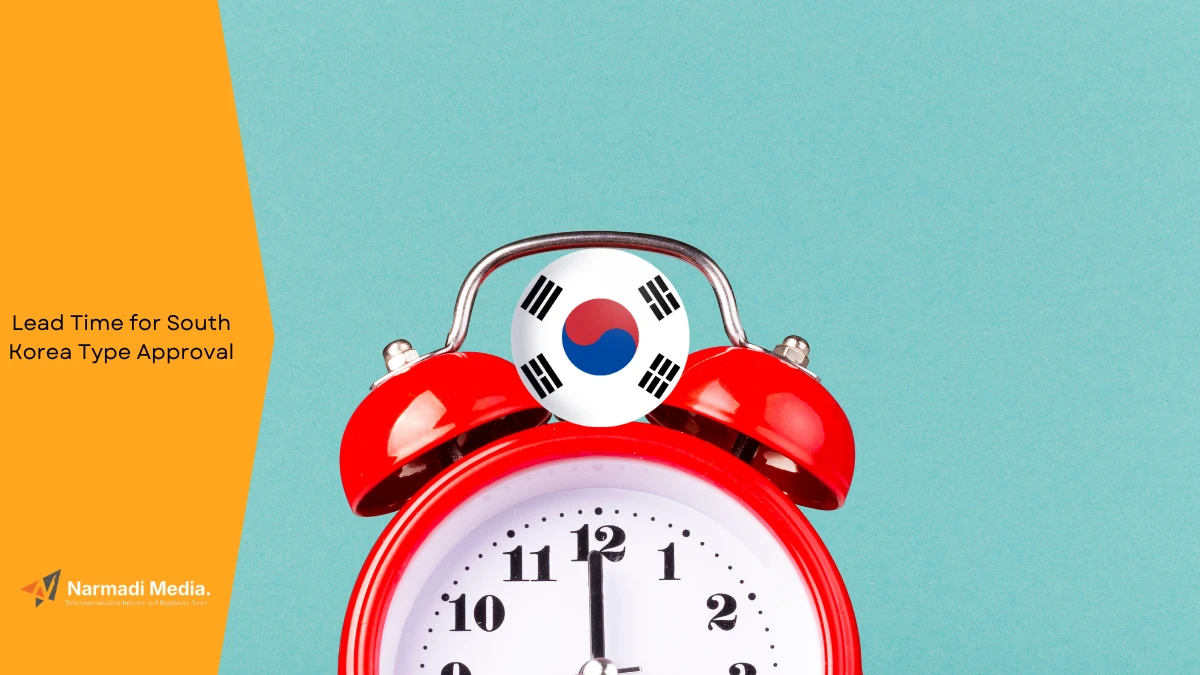
When applying for KC certification, the most frequently asked question concerns the lead time. Therefore, manufacturers, importers, and distributors need to understand the lead time for South Korea type approval.
In South Korea, the only method available is local testing. This is why the lead time for South Korea type approval is not as short as in other countries that apply the paperwork method.
All certification requirements are determined by the National Radio Research Agency (RRA). This article provides detailed information on the lead time for South Korea type approval.
Also Read
Lead Time and Business Setup
The Radio Frequency (RF) type approval process can take varying amounts of time. Some are quick, while others are slow. This is typically influenced by the applicable testing methods.
Generally, local testing takes longer than paperwork or document evaluation. Some local testing can take up to two months.
The length of this process will indirectly impact your business planning. This relates to costs, marketing planning, and market readiness. These aspects can be managed more effectively by knowing the timeline of the certification application process.
South Korea has a lead time that is not short. This is because only the local testing route is mandatory for applying for certification. Thus, you can prepare your business planning thoroughly.
Understanding the lead time for South Korea type approval will help you avoid disruptions to your business planning during the process.
The Process of South Korea Type Approval
Before discussing the lead time for South Korea type approval, it is important to understand how the process works. The KC certification process can only be completed through local testing.
The process—from local testing to the issuance of the certificate—is not short. Understanding this process will help you understand the time required to obtain the certificate.
Local testing
Local testing for South Korean type approval is the most comprehensive route. This method requires testing at a local laboratory.
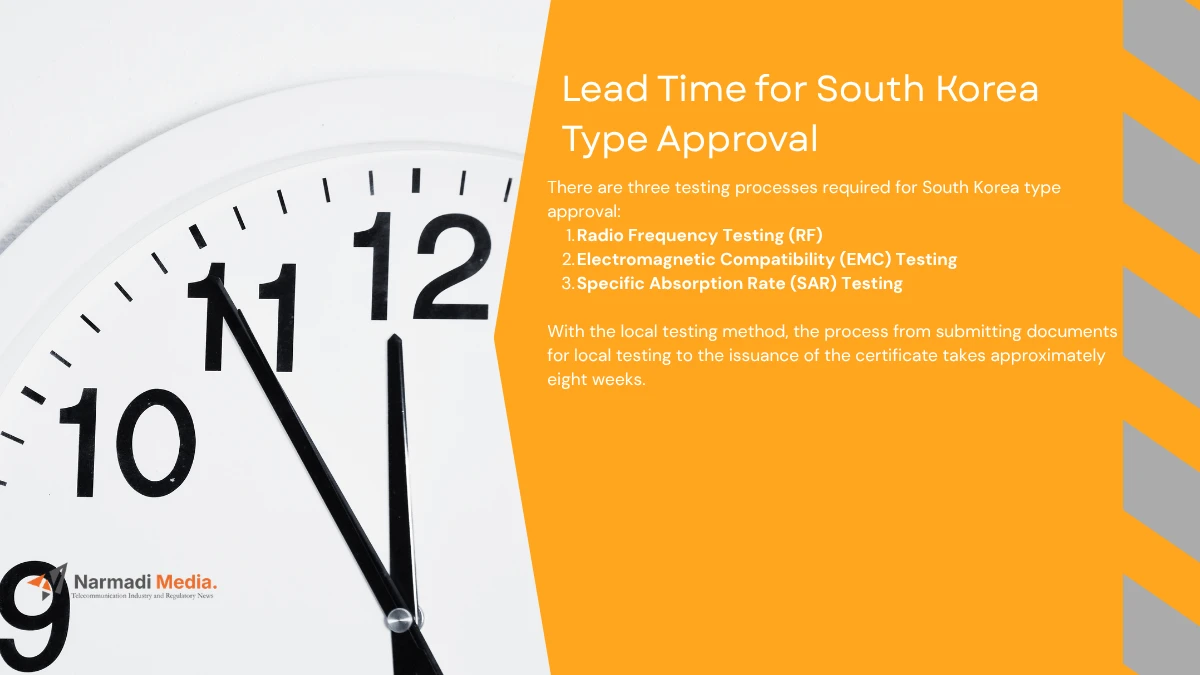
The Certification Body (CB) will determine the appropriate laboratory based on testing requirements and schedule availability. There are three testing processes required for South Korea type approval:
- Radio Frequency Testing (RF)
- Electromagnetic Compatibility (EMC) Testing
- Specific Absorption Rate (SAR) Testing
The testing process will depend on the features of the telecommunications device. Local testing requires sample requirements for South Korea type approval. The sample will be the device measured to ensure compliance with applicable technical standards.
Local testing will determine whether the sample passes or not. If it passes, you will proceed to the document evaluation stage. If it fails, you will need to retest.
Local testing generates a test report. This report must then be attached to other supporting documents and submitted to the CB for evaluation.
Passing the document evaluation will result in the immediate issuance of the certificate. However, if the evaluation fails, you will be asked to correct any incorrect or missing documents and resubmit them.
Lead Time for South Korea Type Approval
Looking at the process above, you can imagine that the lead time for South Korea type approval takes time. With the local testing method, the process from submitting documents for local testing to the issuance of the certificate takes approximately eight weeks.
Because of the length of the process, you need to prepare all the requirements from the very beginning. You don’t want errors, missing documents, or failures in local testing that cause delays in the process.
The lead time for the certification process will indirectly impact your business planning. Therefore, you must factor it into your budget planning and market readiness.
Partnering with Narmadi Company will resolve issues related to the risk of process delays and support your business planning. We will ensure all documents are complete and compliant, and that samples meet technical standards, so the process can be completed within the specified lead time.
Our team will ensure your KC certification is completed on time. We offer a pre-testing service that verifies your samples meet technical standards before official testing in the laboratory.
Through this approach, we have proven to avoid the risk of RF type approval delays in Japan. The results will have a significant impact on your product’s entry into the market.