Various types of Electronic Shelf Label (ESL) have their own functions and advantages. The types are ESL E-paper, Color ESL, with NFC or QR code features, Modular ESLs, and ESL LCD, which uses electronic paper technology to display.
Color Electronic Shelf Label displays labels more attractively and colorfully. This is also directly connected to the store's data center wirelessly, allowing for automatic updates of price changes, discounts, and new promotions from a distance.
This article explains the color Electronic Shelf Label, starting with its definition, operations, and examples of applications.
What is a Color Electronic Shelf Label?
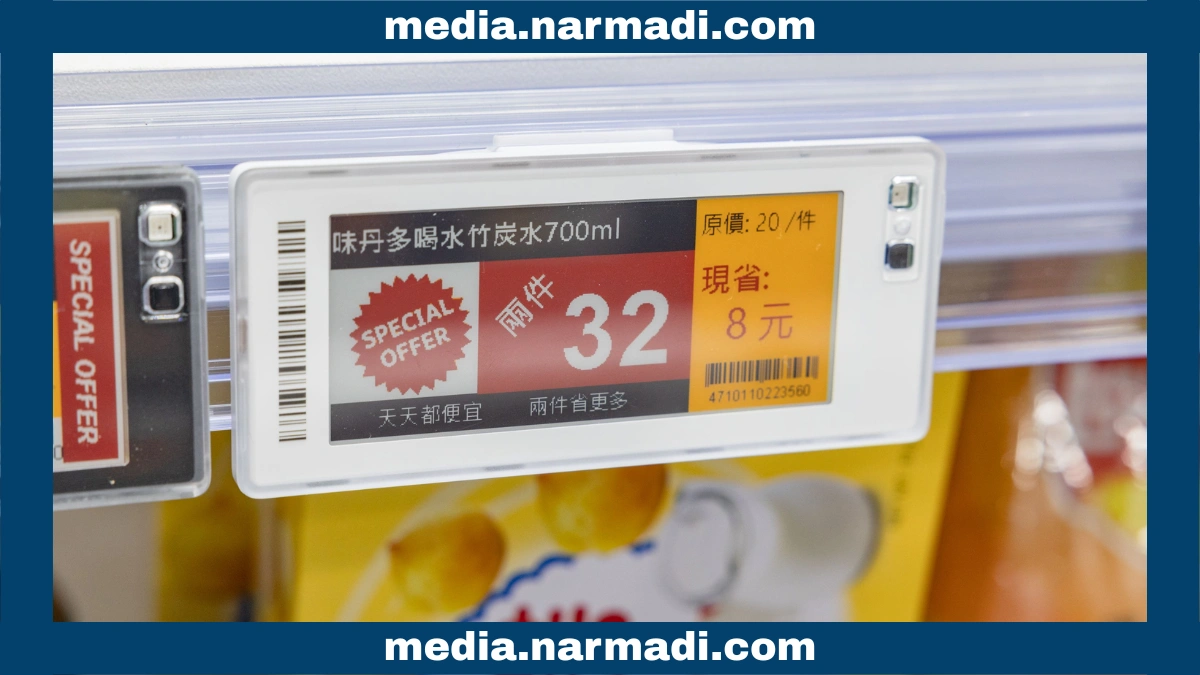
Color Electronic Shelf Label (ESL) is a type that displays labels more attractively and colorfully. This type of ESL can display colors such as red, yellow, or green to attract attention. However, it must be acknowledged that the colors are not as vibrant as those of an LCD screen.
It is often used for items that you want to highlight on the shelf, such as promotional products or items on sale at a big discount. However, this type should be used selectively because it has higher power consumption.
How do They Work?
Color Electronic Shelf Labels (ESL) work by using technology that can display a combination of colors, such as red, yellow, or green. This device requires an antenna and transmitter to send wireless signals from the control center to all labels in the store.
Each shelf equipped with ESL will be connected to the control center. From here, store managers can update information such as product prices or discount information. Wireless signals containing price changes will be sent to all labels via the transmitter. After that, electronic labels that receive the signal will immediately display the latest information.
The Examples of Applications
Its ability to display prices, discounts, and product information in various colors makes Color Label Electronic Shelf Labels (ESL) a valuable tool for a variety of needs. Here are some examples of its use:
- Highlighting promotions and discounts: Color displays can attract customers' attention.
- Branding and product information: Enables the display of brand visuals, store colors, and important product-related information.
- Inventory management: Color labels can be used to indicate inventory status, such as yellow for low stock and red for out-of-stock items.
- Navigation and area segmentation: Color labels make it easier for customers to navigate the store, for example, by categorizing products, such as fresh food, electronics, and health products.
The Advantages
Here are the main advantages of the Color Electronic Shelf Label (ESL):
- Providing visual appeal: The use of color on labels attracts more customer attention because it gives a more dynamic and modern impression.
- Clear promotion: Giving special colors to promotional products can make customers more aware of the information.
- Providing complete information: Not only does this device display prices, but it can also provide more detailed product information, including raw materials, ratings, and current stock.
- Flexible placement: Can be placed on various surfaces, such as shelves, walls, or even warehouses.
- No electricity required: The device operates without a power source, utilizing long-lasting batteries.
- Environmentally friendly: Drastically reduces paper usage, thereby reducing waste and environmental impact.
That's a brief overview of the Color Electronic Shelf Label (ESL), covering its definition, operations, and an example of application. This device will clearly offer advantages, including enhancing visual appeal, promoting clarity, and being environmentally friendly. [UN]